Tell us about the job
Takes about a minute. No obligation.
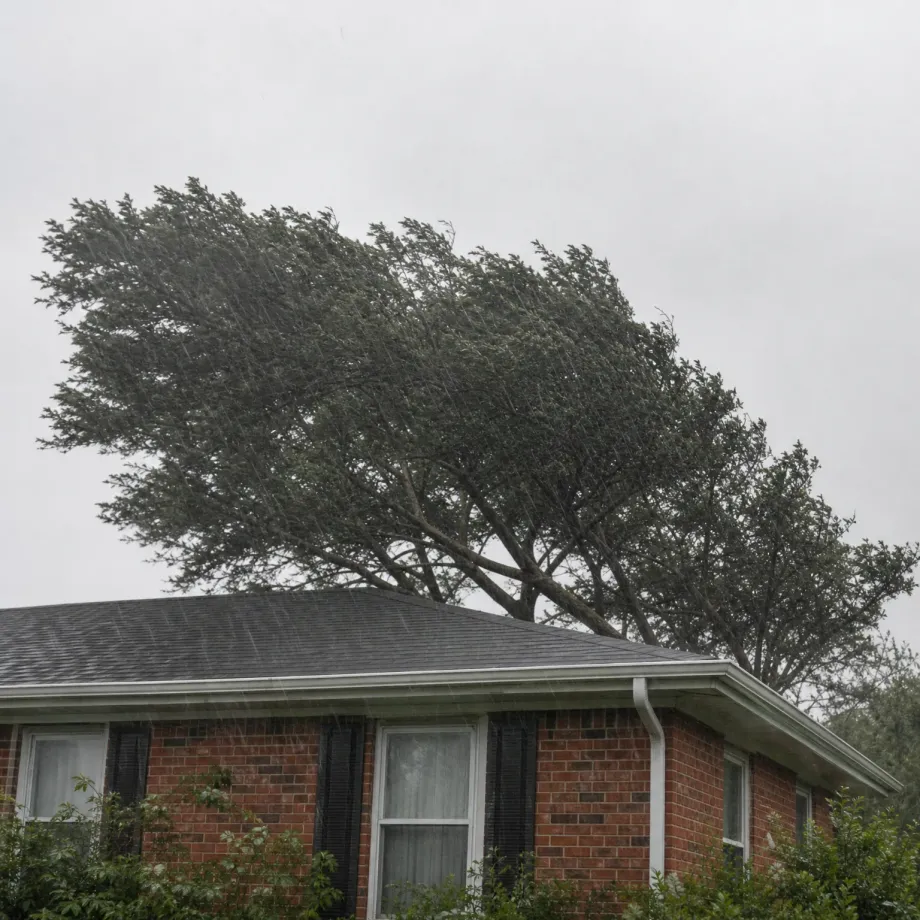
A contractor quoting a boiler installation in Fayette County starts by sizing the system to the house, because that calculation is what determines whether the equipment heats reliably for years or runs short and cycles hard. 56 severe weather events were recorded in Fayette County, Alabama between 2015 and 2024. At that rate, severe weather is something that passes through, not something a system here is built around every season. A poorly sized or loosely fitted boiler will fail on a calm February night just as readily as on a rough one. The weather record here does not set the terms of a good install. Proper sizing, sealed connections, and correct venting do.
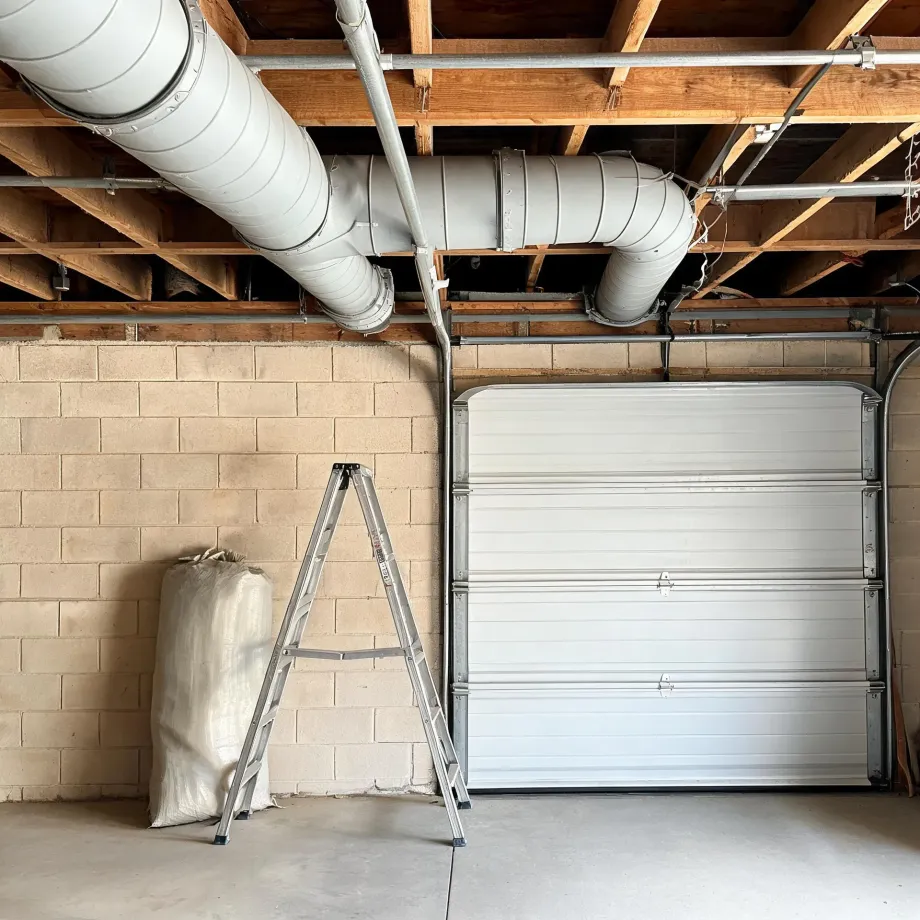
Ductwork sized and routed for one era of heating does not automatically suit what a licensed contractor puts in now. Half the homes in Fayette County, Alabama were built in 1980 or earlier (2020-2024 ACS 5-year). That gap between when the house was built and what it runs today is where a boiler installation gets complicated or stays straightforward: a contractor has to assess whether the existing distribution system moves heat the way the new unit demands, and whether the electrical service supports it, before anything else on the job can be priced or scheduled.
What a New Boiler System Puts in Your Home
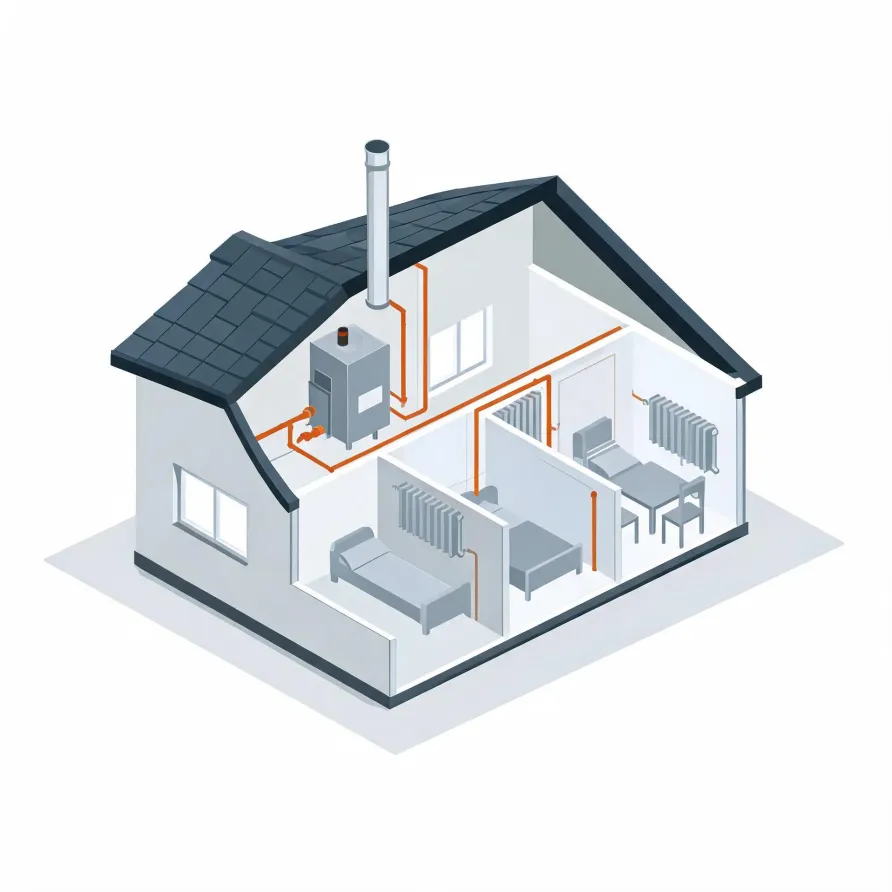
The boiler itself sits in the basement or a utility room and is the unit that heats water for the whole system. From there, a network of pipes runs through the house, carrying that heated water to radiators or radiant floor circuits in each room. Those terminal units are what the homeowner sees and feels day to day.
An expansion tank connects near the boiler to handle pressure changes as water heats and cools. A circulator pump moves water through the piping loop, and a thermostat mounted on a main living area wall ties the whole system together by signaling when to call for heat.
The drawing shows a typical layout, and a licensed contractor determines exactly what applies to your house and how each piece fits into it.
Get matched in Fayette CountyFayette County, by the numbers
56 severe weather events were recorded in Fayette County, Alabama between 2015 and 2024.
NOAA National Centers for Environmental Information, Storm Events Database, bulk CSV export, events 2015-01-01 through 2024-12-31.Half the homes in Fayette County, Alabama were built in 1980 or earlier (2020-2024 ACS 5-year).
U.S. Census Bureau, 2020-2024 American Community Survey 5-Year EstimatesFayette County, Alabama holds 7,810 housing units (2020-2024 ACS 5-year).
U.S. Census Bureau, 2020-2024 American Community Survey 5-Year EstimatesOwners occupy 78.4% of the occupied homes in Fayette County, Alabama (2020-2024 ACS 5-year).
U.S. Census Bureau, 2020-2024 American Community Survey 5-Year EstimatesBoiler & HVAC Installation Rules for Fayette County, Alabama1 sourced standards and codes
Licensing and Legal Requirements in Fayette County, Alabama
Alabama requires state certification to do heating, air conditioning and refrigeration contracting: nobody may advertise, bid, pull permits or do the work unless the person in responsible charge is a certified contractor.
Severe Weather Events in Fayette County
Weather puts direct demands on heating equipment: hard winters, temperature swings, and storm-driven outages all affect how hard a boiler has to work and how reliably it needs to perform. In Fayette County, that workload shapes what a contractor installs and how they size it.
56 severe weather events, 2015–2024. Source: NOAA National Centers for Environmental Information, Storm Events Database.