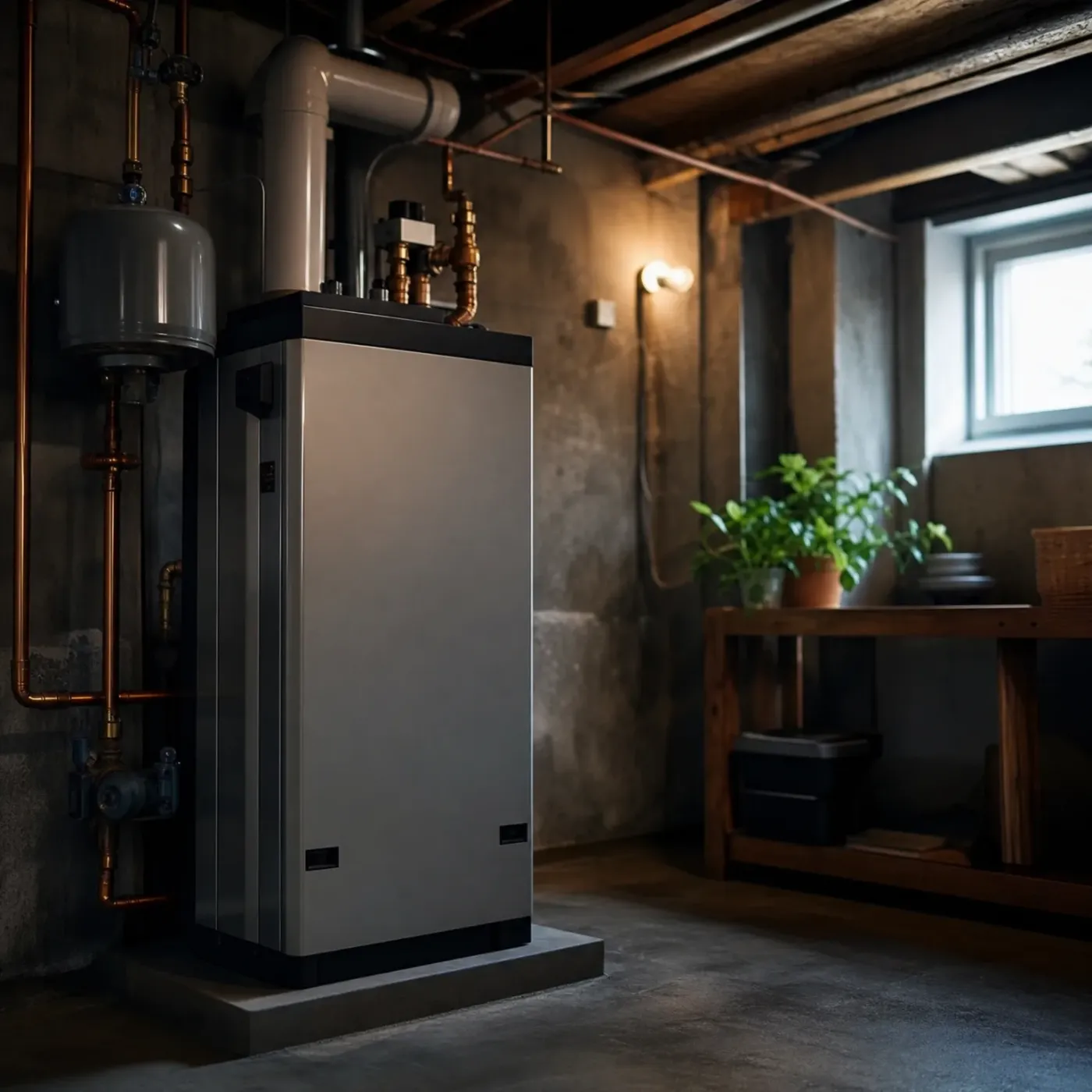
A floor-standing gray boiler unit on a concrete plinth in a basement, with copper pipes, an expansion tank, and a flue pipe above, a wall light, a small potted plant on a wooden shelf, and a window in the background.

Get matched with a boiler pro in Jefferson County

Boiler pilot light out in Birmingham, AL

A pilot light that won't stay lit usually means a worn thermocouple, a draft at the burner, or a clogged pilot orifice. Mild winters here mean a boiler with no heat can sit unnoticed for days before anyone notices. Below, what to check first and when to stop and call someone licensed to work on it, so you're not stuck calling around Jefferson County for a contractor on your own.

Match me with a pro

A pilot light that goes out on its own, over and over, almost always points to a worn thermocouple. That's the small sensor that sits in the flame and tells the gas valve it's safe to stay open. Once it wears out, it reads the flame as too weak even when it's burning fine, and the valve shuts the gas off. A draft blowing across the burner can blow the flame out directly, and a clogged pilot orifice can starve it so it never burns strong enough to hold. Winters in Birmingham are mild, which means a boiler that's lost its pilot can go unnoticed for days since the heat isn't running hard to begin with. By the time you catch it, the house has been cold longer than it felt. Relighting it yourself will tell you if the flame holds. If it won't stay lit after a couple of tries, the part behind it needs a look.

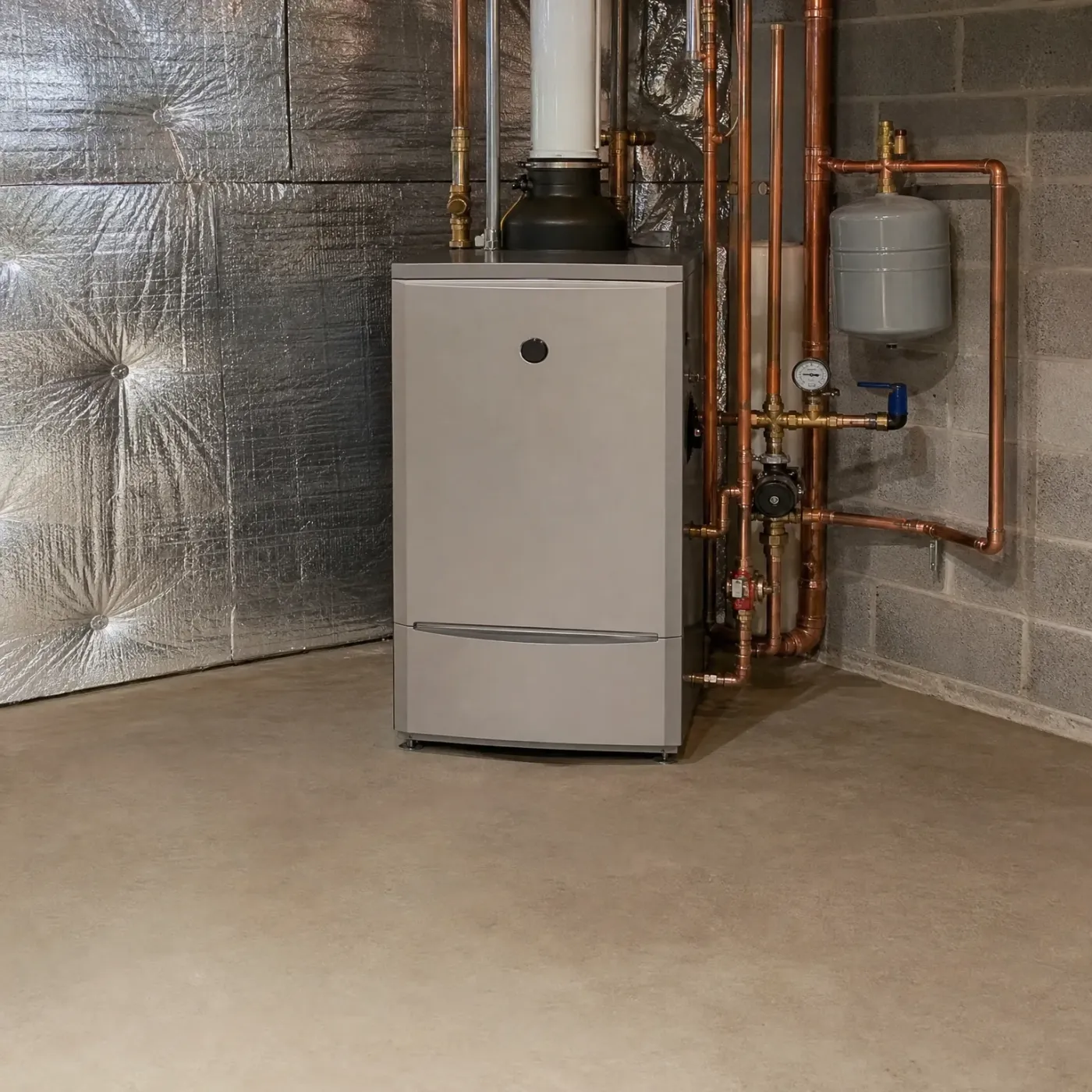
A gray residential boiler in a basement corner with copper piping, a circulator pump, pressure gauge, blue-handled valve and gray expansion tank against a concrete block wall, next to a foil-insulated wall.

When the pilot holds

A steady blue flame at the pilot means the thermocouple is still reading it correctly and the gas valve stays open. The pressure gauge sits in normal range and the circulator pump moves water through the copper lines without you having to think about it.

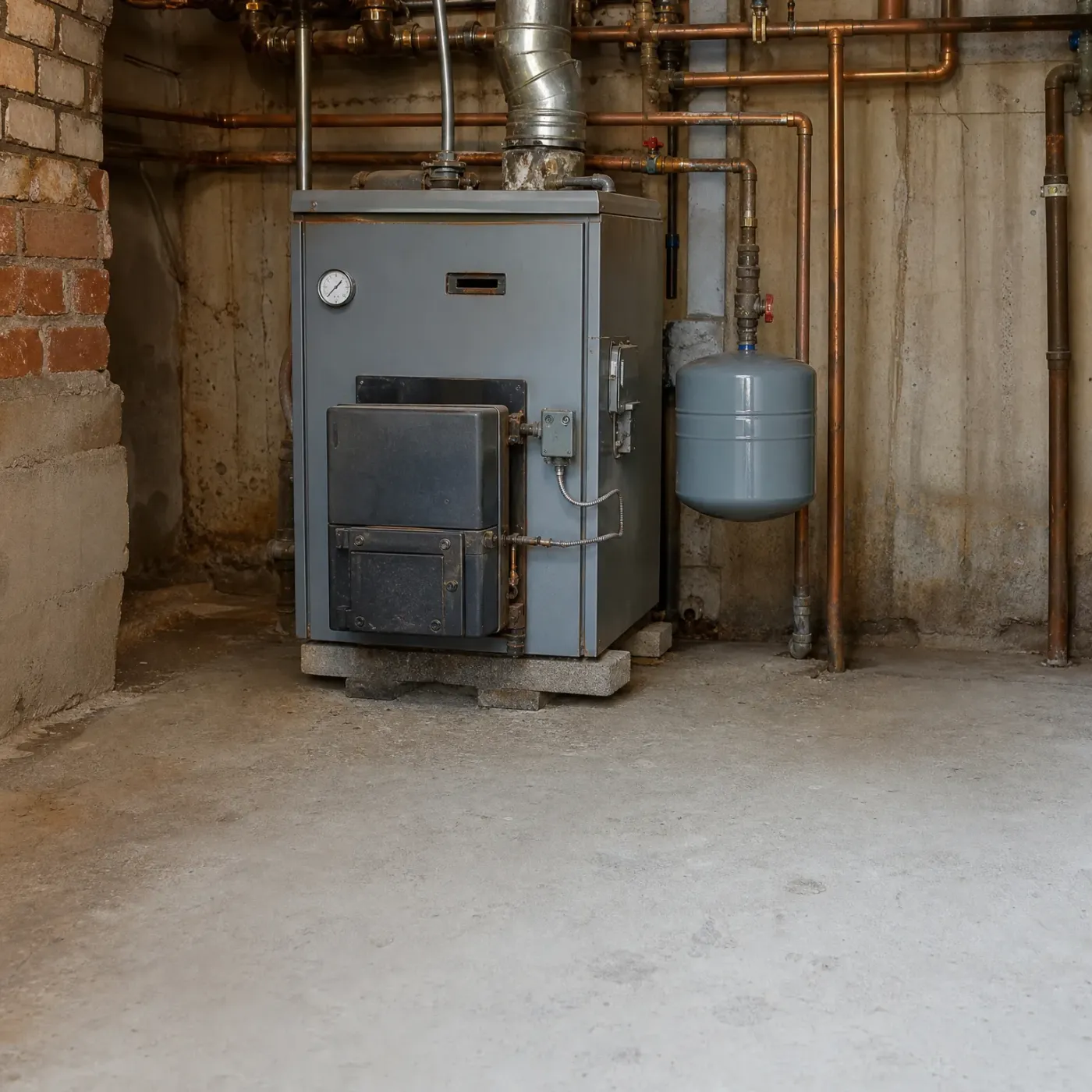
A gray boiler on a concrete block base in a basement, with copper piping, a metal flue, and a gray expansion tank mounted beside it against a concrete wall.

When it won't stay lit

This older boiler relights, then goes dark again a few minutes later. That pattern points to the thermocouple or a draft reaching the burner, not the gas supply. The shutoff valves and expansion tank are fine. The problem is at the pilot itself.

Relight It or Call for the Fix

Relight it yourself

  • Most gas boilers have the relighting steps printed right on a plate inside the access panel, in order.
  • You hold the reset button or turn the gas knob to pilot before the igniter will spark at all.
  • If the flame catches and holds past 30 seconds, the thermocouple is still doing its job.
  • This costs nothing and takes a few minutes, so it's worth trying before anything else.
  • If the pilot won't catch, or catches and dies again once you let go of the knob, relighting won't fix what's wrong underneath.

Call a contractor

  • A pilot that relights fine but keeps going out points to a part that needs replacing, not another match.
  • A thermocouple is a cheap part, but it sits deep enough in the burner assembly that swapping it means taking the panel apart correctly.
  • A draft reaching the pilot from a vent or a loose panel is easy to miss and easy for someone to walk past if you don't know where to look.
  • A clogged orifice takes a specific tool to clear without damaging it, and guessing at it can bend something that costs more to fix.
  • Skip the search for who's licensed nearby, the calls to three different companies, and explaining the same problem each time by getting matched with one contractor who already knows what you've described.
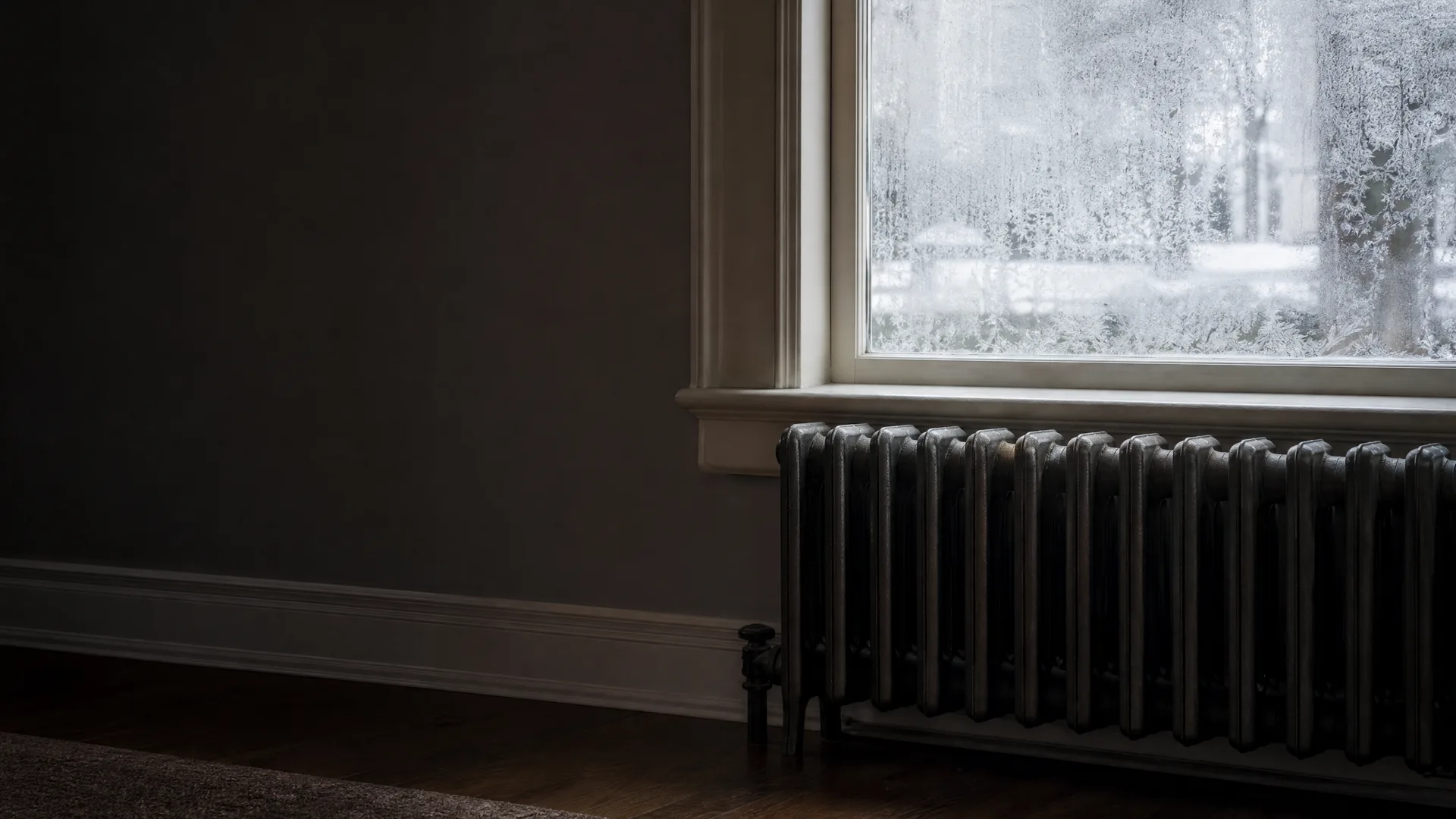
A cast iron column radiator with a valve stands beneath a window with a frosted pane showing snowy trees outside, in a dim room with dark walls and wood flooring.

You walk into the living room a little after seven and the cold hits you before you even look at the thermostat. The radiator under the window is silent. Ice has formed on the inside of the glass, a thin film across the bottom pane where your breath would fog it if you stood close. The cast iron is cool to the touch, not even holding the ghost of last night's heat. You crouch down and check the access panel out of habit more than hope. Outside, Jefferson County is having one of its hard mornings, the kind that doesn't last long but doesn't care that it caught you unprepared. You already know calling around to find someone free today is its own chore, on top of everything else this morning is asking of you.
Get your boiler to the right pro

Explain the boiler problem once instead of to every shop in Jefferson County.

You're not committing to anything by asking.

Why the orifice clogs at all

The pilot orifice is a small brass fitting with a pinhole opening that meters gas to the pilot flame. Dust and lint settle in there over the months a boiler sits idle, and in Jefferson County that idle stretch runs long with mild winters cutting down how often the burner fires. A speck of debris is enough to choke the opening and starve the flame, even though the thermocouple and gas valve are both working fine. A contractor clears it with a thin wire or compressed air, never a drill bit, since widening the hole changes how the flame burns.

What a draft does to the flame

A pilot flame needs to wrap around the thermocouple tip to heat it enough for the gas valve to read a safe signal. Even a light draft through a loose access panel or a nearby vent can bend that flame away, so the thermocouple cools and the valve cuts the gas, same as if the flame had gone out on its own. This is why a pilot that relights fine but won't hold sometimes has nothing wrong with the thermocouple at all. Closing off the draft source, not replacing a part, is what actually fixes it.

Winter nights average 35°F

At 35°F overnight, a boiler that loses its pilot isn't fighting to keep up with real cold, it's just off. There's no backup warmth coming from anywhere else in the house. A pilot out on a Tuesday can still be out on a Friday if nobody's checked it.

NOAA nClimDiv 1991-2020

What a pilot repair involves

A worn thermocouple gets replaced, not cleaned. It's a cheap part, but reaching it means taking off the burner access panel and sometimes the burner itself, depending on the boiler. A clogged orifice has to be cleared without widening the hole, since that changes how much gas reaches the flame. If the pilot goes out because of a draft, the fix might be as simple as sealing a gap near the flue or as involved as checking the venting for a blockage. None of this is guesswork done by feel. It's testing the millivolt signal the thermocouple sends, checking gas pressure against the rating plate, and confirming the flame looks right before closing the panel back up.

What finding someone usually takes

Most people start by searching around for a boiler tech, then calling two or three to see who answers and who can actually come out this week. Each call means describing the same thing again: the pilot won't hold, you've tried relighting it, it goes out within a minute or two. Then there's waiting on quotes, if they give one over the phone at all, and trying to judge who's worth having in the house based on a five-minute conversation. Submitting a request here replaces that part. You describe the problem once, and a contractor who works on boilers in Jefferson County reaches out to you directly.

A woman in a cream cowl-neck sweater sits by a window with snow outside, in a dimly lit living room with a sofa, lit lamp, mirror, candles and a fireplace.
A woman in a gray turtleneck sweater sits beside a large window looking out at snow-covered evergreen trees, in a dimly lit living room with a lit fireplace, lamps, couch and houseplant.
A woman in a cream turtleneck sweater stands beside a large window with snow-covered ground and bare trees outside, in a dimly lit living room with lamps, a sofa and framed art.
A woman in a grey cowl-neck sweater stands indoors near a window, looking out at falling snow, with a lamp, framed picture and couch in the warmly lit room behind her.

Where This Leaves You

  • A pilot that won't hold almost always comes down to a worn thermocouple, a drafty burner area, or a clogged orifice.
  • Mild Jefferson County winters mean a boiler can sit unused for stretches, giving dust time to settle in the orifice.
  • A steady blue flame at the pilot is the sign the thermocouple still reads correctly and the gas valve stays open.
  • Relighting it yourself only makes sense if the flame catches and holds past the printed steps on the access panel.
  • A thermocouple gets replaced rather than cleaned, and reaching it can mean removing the burner access panel or the burner itself.
  • At 35 degrees overnight, a boiler with no pilot isn't struggling to keep up, it's simply off with no heat coming from anywhere else.

A pilot that keeps going out has a cause, and it's almost always one of three things: the thermocouple has worn past the point of reading the flame right, something is drafting across the burner area, or the orifice has clogged with dust from a stretch of not running. Jefferson County winters are mild enough that a boiler can sit idle for days at a time between calls for heat, and that idle time is exactly when dust settles into the orifice or a thermocouple's weak reading finally fails. You can relight the pilot yourself following the plate inside the access panel, and if the flame catches and holds, that tells you something. If it won't hold, that tells you something too. A thermocouple that's worn needs to be replaced, not cleaned, and getting to it usually means pulling the burner access panel and sometimes the burner itself. None of that is a repair to guess at or put off. At 35 degrees overnight, a boiler with no pilot isn't laboring to keep the house warm, it's off, and nothing else in the house is making up the difference. The radiators stay cold until the pilot is lit and holds. Whether that's a five-minute relight or a thermocouple swap depends on what you find when you open the panel, but either way the house doesn't warm back up on its own. A boiler that won't hold a pilot more than once in a season is telling you it needs a look, not another relight.

A bearded man in a plaid flannel shirt stands in a kitchen looking out a window toward snow-covered shrubs, with a steaming mug on the windowsill and potted plants on a shelf behind him.
A smiling man with dark curly hair in a navy t-shirt sits on a gray couch indoors, with a large-leafed plant and a window in the background.

Boiler Repair

Find a boiler repair pro in Jefferson County

Skip calling shops to ask who repairs boilers in Jefferson County.

A black-framed smartphone standing upright against a plain light gray background, its screen filled with solid green.
Step 1 of 3: Equipment