Tell us about the job
Takes about a minute. No obligation.
A boiler repair in Coffee County starts with what the system has already been through. 278 severe weather events were recorded in Coffee County, Alabama between 2015 and 2024. At that rate, severe weather is part of the normal operating life of every boiler in this area, and contractors expect to find wear on the components that take the hardest hits during pressure and temperature swings: heat exchangers, relief valves, expansion tanks. Age and maintenance history still matter, but a contractor who skips the weather-load inspection before quoting a repair is missing the context that decides which parts actually need replacing.
Half the homes in Coffee County, Alabama were built in 1987 or earlier (2020-2024 ACS 5-year). A boiler that old has almost certainly been replaced at least once, which means what a contractor finds inside the unit on any given call reflects a later generation of equipment installed into an older house. That gap matters for parts. When a boiler opens up, the question is whether the components it takes are still in production and whether a supplier can turn them around, and that answer changes with the specific model a previous owner chose, not with the year on the building permit.
The Parts of a Boiler a Contractor Checks First
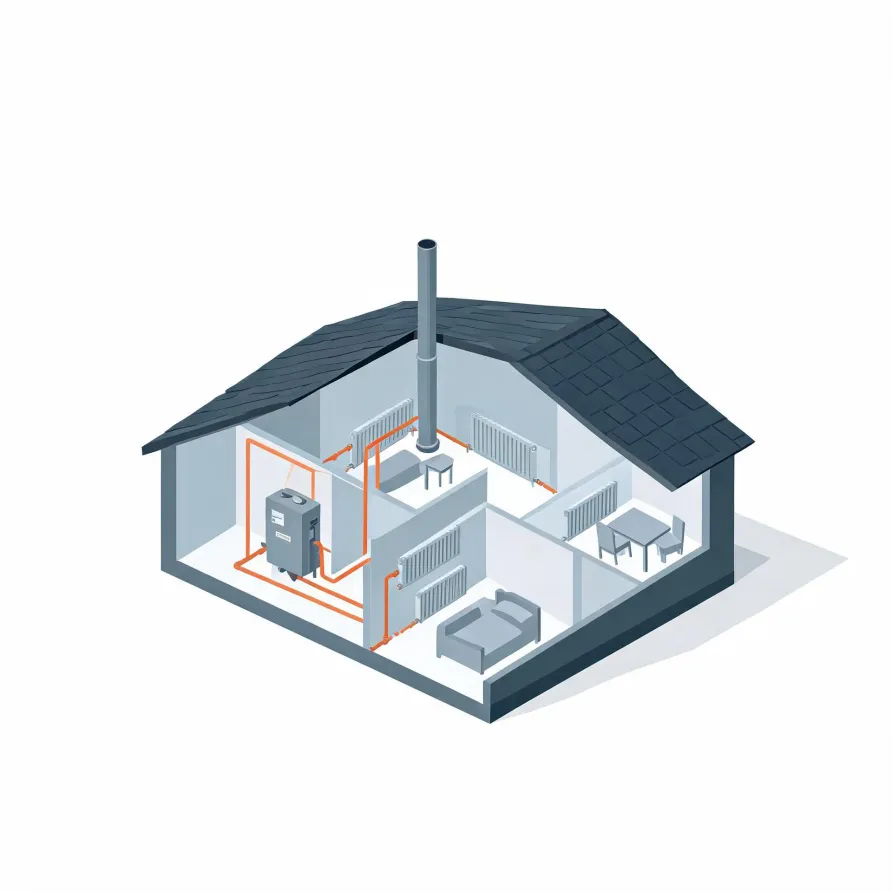
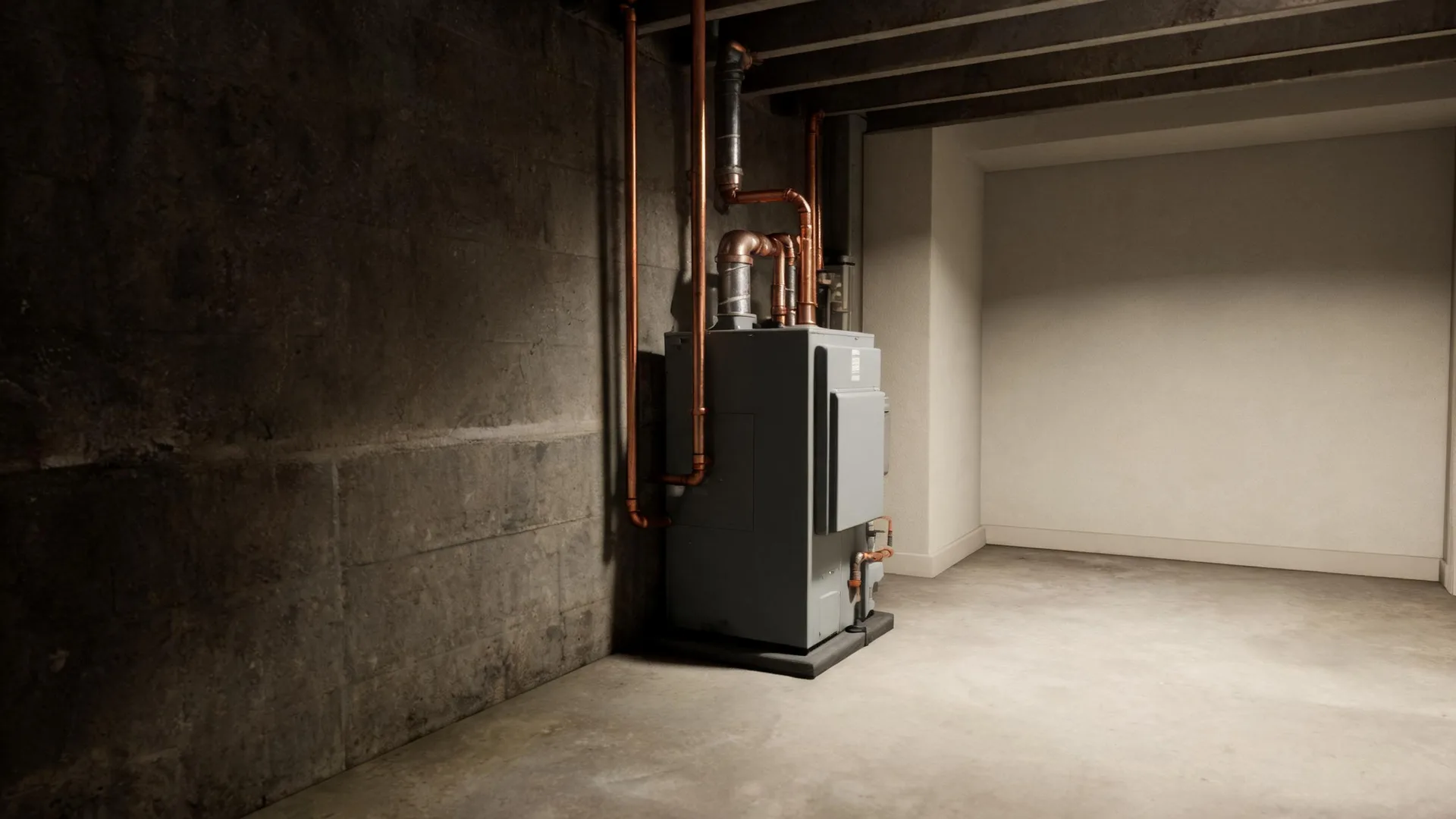
The boiler itself sits in the basement or mechanical room and is the piece a contractor reaches first. It heats water and pushes it through the system. When a home loses heat or pressure drops unexpectedly, the boiler body, its burner assembly, and the heat exchanger inside it are where the diagnosis starts.
The circulator pump moves heated water out through the supply pipes and draws cooler water back through the return line. The expansion tank, usually mounted nearby, manages pressure as water temperature changes. The thermostat on the wall and the zone valves that direct flow to different parts of the house round out what a contractor traces when one area of the home stays cold.
The drawing shows a typical boiler layout, and a licensed contractor determines which components apply to your specific system.
Get matched in Coffee CountyCoffee County, Alabama, by the numbers
278 severe weather events were recorded in Coffee County, Alabama between 2015 and 2024.
NOAA National Centers for Environmental Information, Storm Events Database, bulk CSV export, events 2015-01-01 through 2024-12-31.Half the homes in Coffee County, Alabama were built in 1987 or earlier (2020-2024 ACS 5-year).
U.S. Census Bureau, 2020-2024 American Community Survey 5-Year EstimatesCoffee County, Alabama holds 24,656 housing units (2020-2024 ACS 5-year).
U.S. Census Bureau, 2020-2024 American Community Survey 5-Year EstimatesOwners occupy 72.3% of the occupied homes in Coffee County, Alabama (2020-2024 ACS 5-year).
U.S. Census Bureau, 2020-2024 American Community Survey 5-Year EstimatesCodes & Standards Governing Boiler and HVAC Repair in Coffee County, Alabama1 sourced rules and standards
What Coffee County, Alabama Requires for HVAC Repair
Alabama requires state certification to do heating, air conditioning and refrigeration contracting: nobody may advertise, bid, pull permits or do the work unless the person in responsible charge is a certified contractor.
Severe Weather Events in Coffee County
Boilers work hardest when outdoor conditions are most demanding, and that pressure adds up over time inside the equipment. How often local weather turns severe shapes how much strain a boiler accumulates, which makes repair patterns in Coffee County a local story rather than a general one.
278 severe weather events, 2015–2024. Source: NOAA National Centers for Environmental Information, Storm Events Database.