15 to 20 years
That range assumes yearly service and a installation that sized the boiler correctly for the house. Skip either one and the number drops.
 Find a pro near me
A local installer who puts in boilers gets your project.
A boiler in Alabama can run 15 to 20 years, sometimes longer, depending on how it was installed and how it's been kept up. Most homes here heat with electricity, so a boiler is already less common, which means fewer people work on them regularly and it matters more to find someone who does.
Summers in Alabama are muggy and hard on any mechanical system sitting idle half the year. A boiler that sits unused from spring through fall can develop problems that only show up the first cold morning you turn it back on. Whether yours is nearing the end or just getting a slow start each winter, the number of years on it only tells part of the story.
Power here is expensive, and a boiler that's struggling costs you more every month it keeps running past its prime. At some point the question isn't how many years are left in it, but whether a new install would cost less to run than what's sitting in your basement or closet now.
If you're trying to figure out where your boiler stands, the straightest path is talking to someone who installs and services them locally, someone who sees what actually fails in boilers around Alabama year after year and knows the difference between a unit with a few good winters left and one that's done. That's who you'll be connected with here, one contractor, licensed and local, reaching out to you directly about your situation rather than a handful of companies competing for your attention.
From there you'll have what you need to decide: repair what you have a little longer, or plan for a new install before next winter makes the choice for you.
A boiler in Alabama typically lasts 15 to 20 years. Most run that long because they aren't worked hard the way a furnace would be in a colder state. Winters here are mild, so the boiler cycles less often over its life, and that lighter use is the main reason it can outlast what you'd expect from the same unit up north. What shortens that life is usually the water side: scale building up in the heat exchanger, a pressure relief valve that's failed, or corrosion in old piping that was never addressed. Since boilers are less common in Alabama homes, finding someone who services them regularly and knows what tends to fail on these systems matters more here than it would with a furnace or heat pump. If yours is approaching that 15 to 20 year mark, or you've noticed uneven heat or rising bills, it's worth having someone look at whether it still makes sense to keep repairing it or to plan for a replacement.




That range assumes yearly service and a installation that sized the boiler correctly for the house. Skip either one and the number drops.
Since most Alabama homes heat with electricity, a boiler that's installed poorly or sized wrong can shorten its life well before year 15.
A boiler nearing the end of its life doesn't quit without warning. You'll notice it taking longer to heat the house, or heating one room fine while another stays cold. Water around the base, even a small puddle, means a seal or fitting is failing. Rust on the tank or the pipes leading into it is another sign worth taking seriously. You might hear banging or kettling from inside the tank, which usually means sediment has built up around the heat exchanger. A pilot light that keeps going out, or a burner flame that looks yellow instead of blue, points to a combustion problem. Left alone, any of these can mean a breakdown in the middle of a cold snap, and a boiler running poorly costs more to operate than one that's maintained.
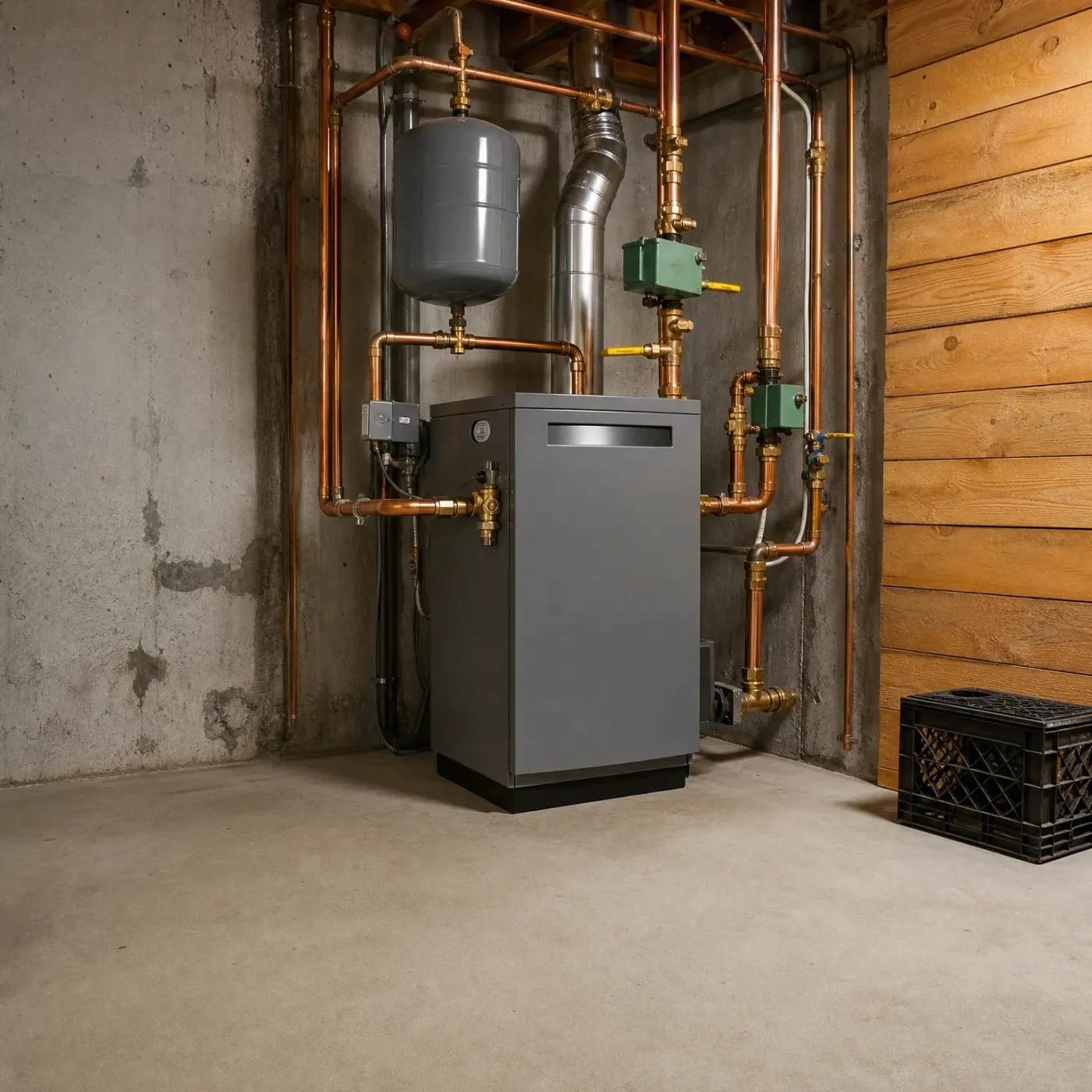
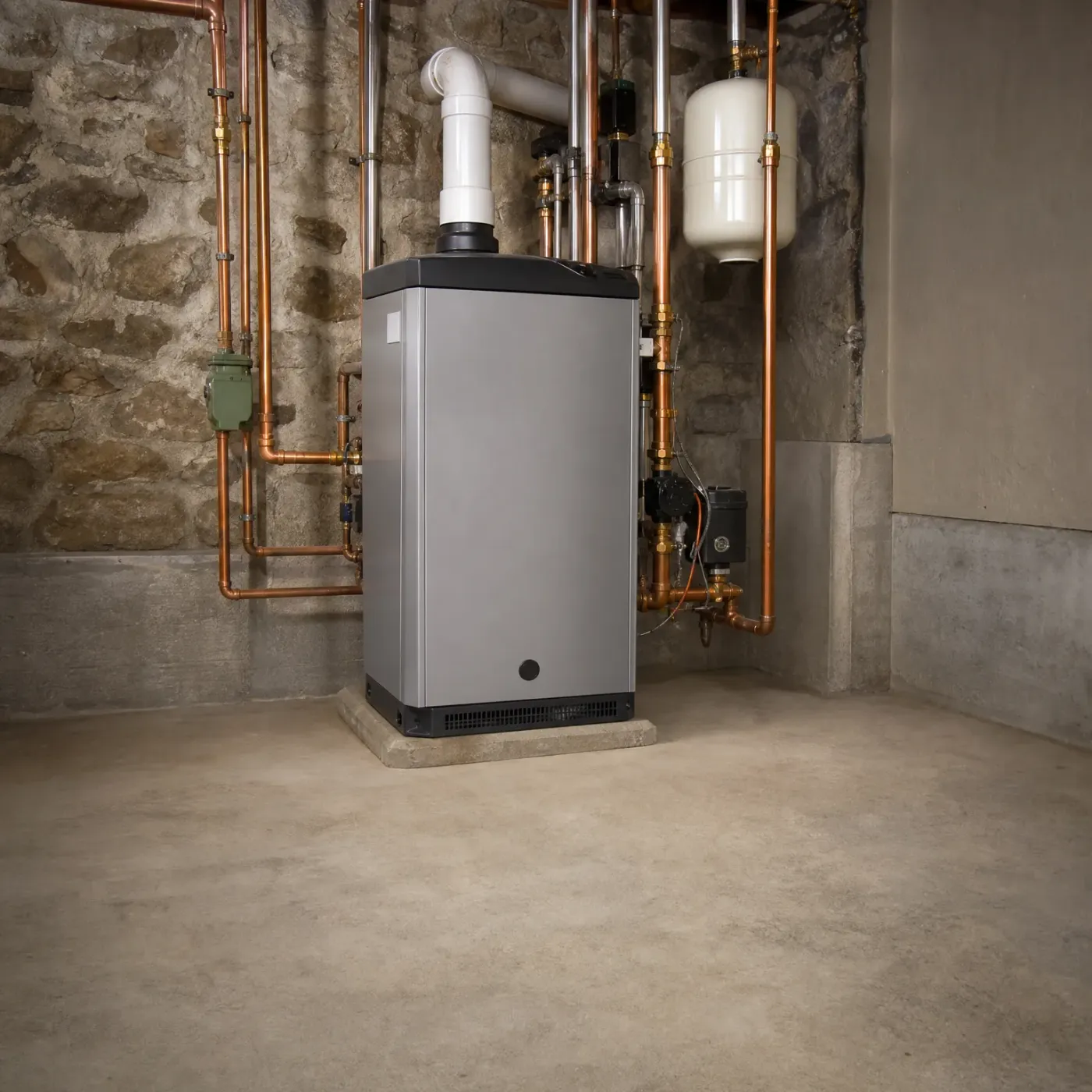
This is what a boiler looks like partway through a normal life. The copper piping is intact, the zone valves are labeled and working, and the expansion tank is doing its job. A setup like this, kept serviced, is what gets a boiler to 20 years.
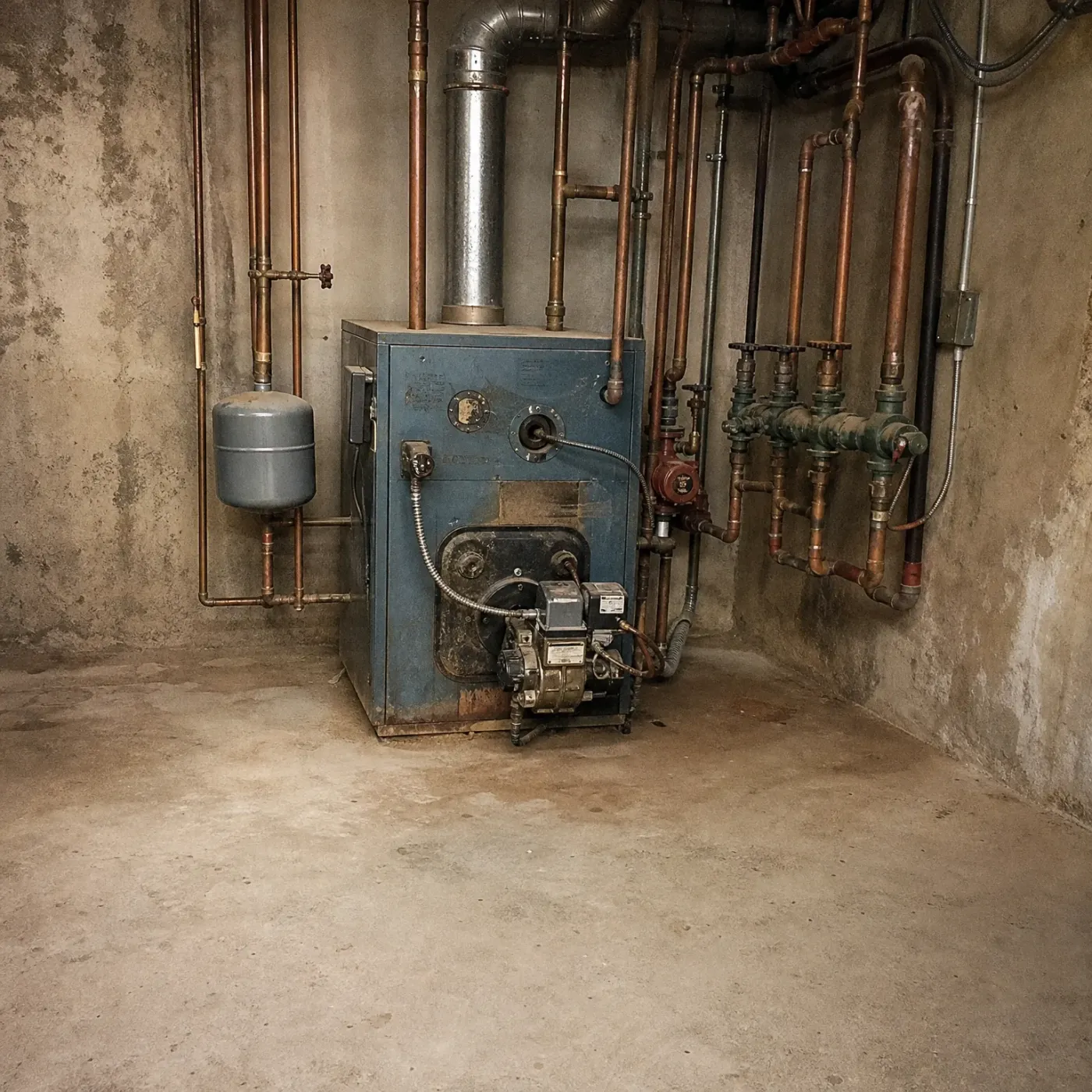
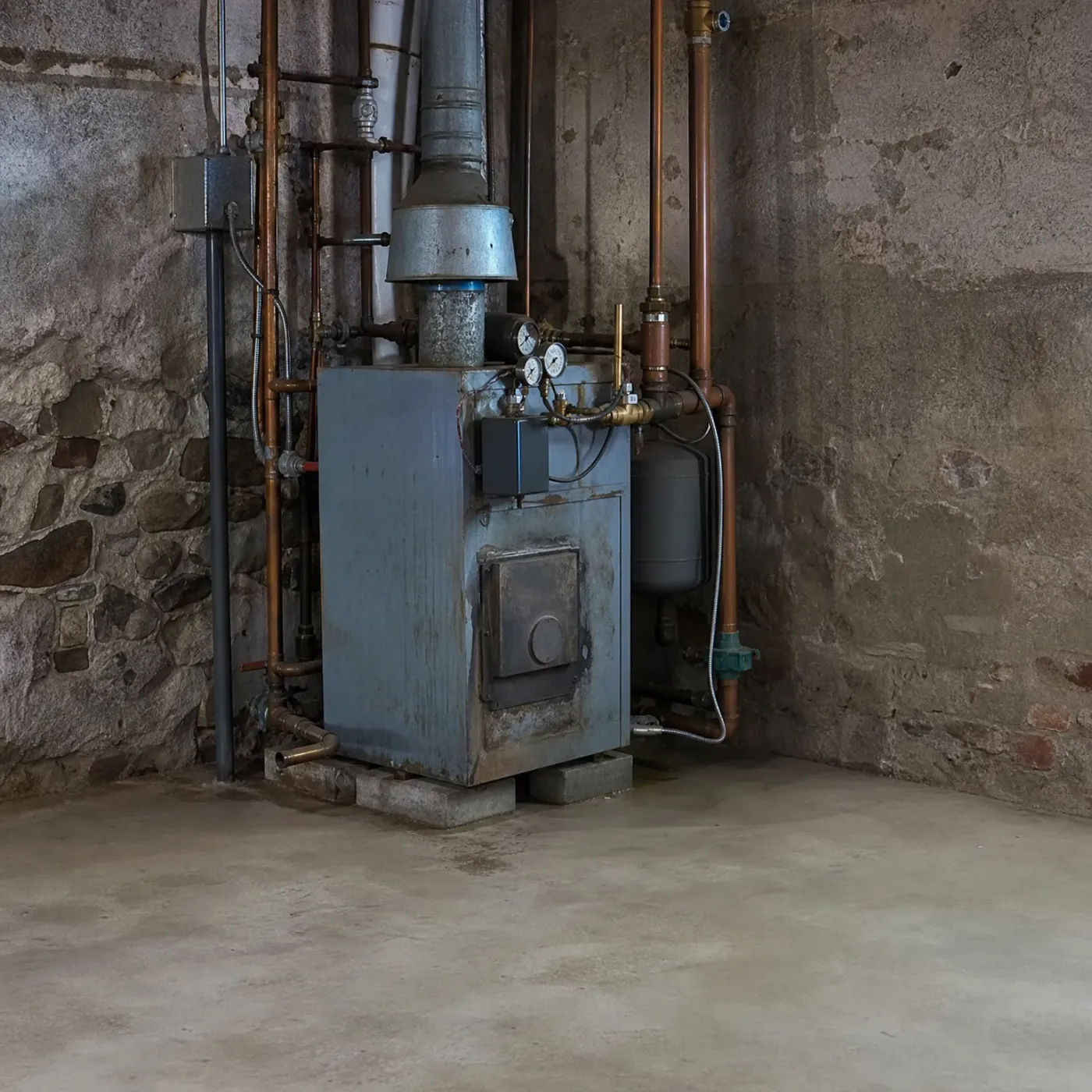
This boiler is older and nobody local is checking in on it. Galvanized flue pipe like this corrodes over time, and the zone valves and circulators along that manifold are original parts doing original work. Once a few of those start failing together, replacement is cheaper than chasing repairs.
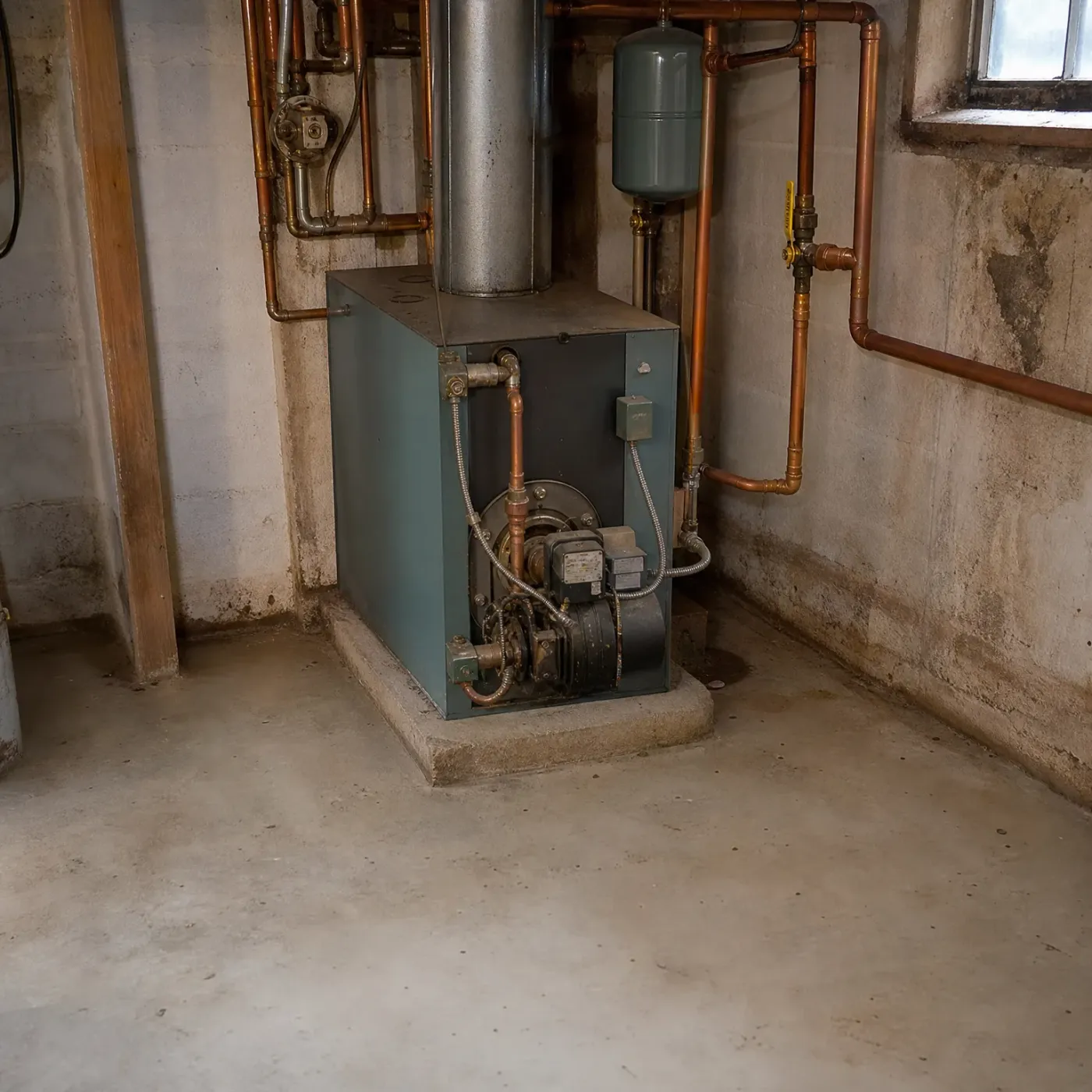
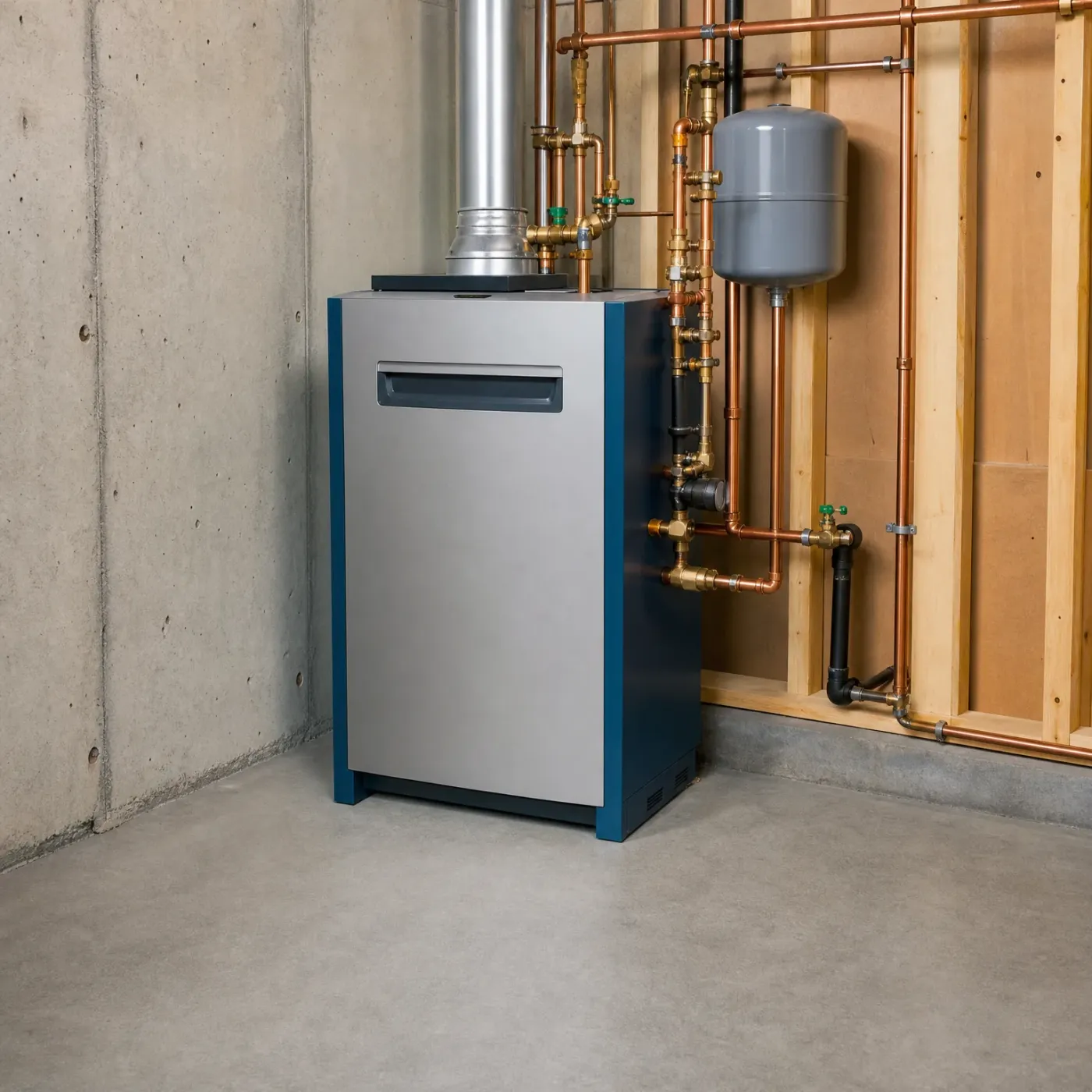
A boiler that's lasted close to 20 years in your house has earned some suspicion, not blind faith. Parts inside it wear even when the cycling is light, and once one starts failing, the rest aren't far behind. Because electric heat is the default here, boiler work doesn't come up often for most contractors, and a install done wrong, or sized wrong, is what cuts that 15 to 20 year range short before it ever gets there. Getting matched with someone local who actually works on boilers, instead of mostly furnaces and electric systems, means the install gets sized and piped the way your house needs, not guessed at. You get one contractor who knows this equipment, not a handful of calls to sort through. If your boiler is already past 15 years, or acting like it, this is worth sorting out before you're choosing a system in the cold.
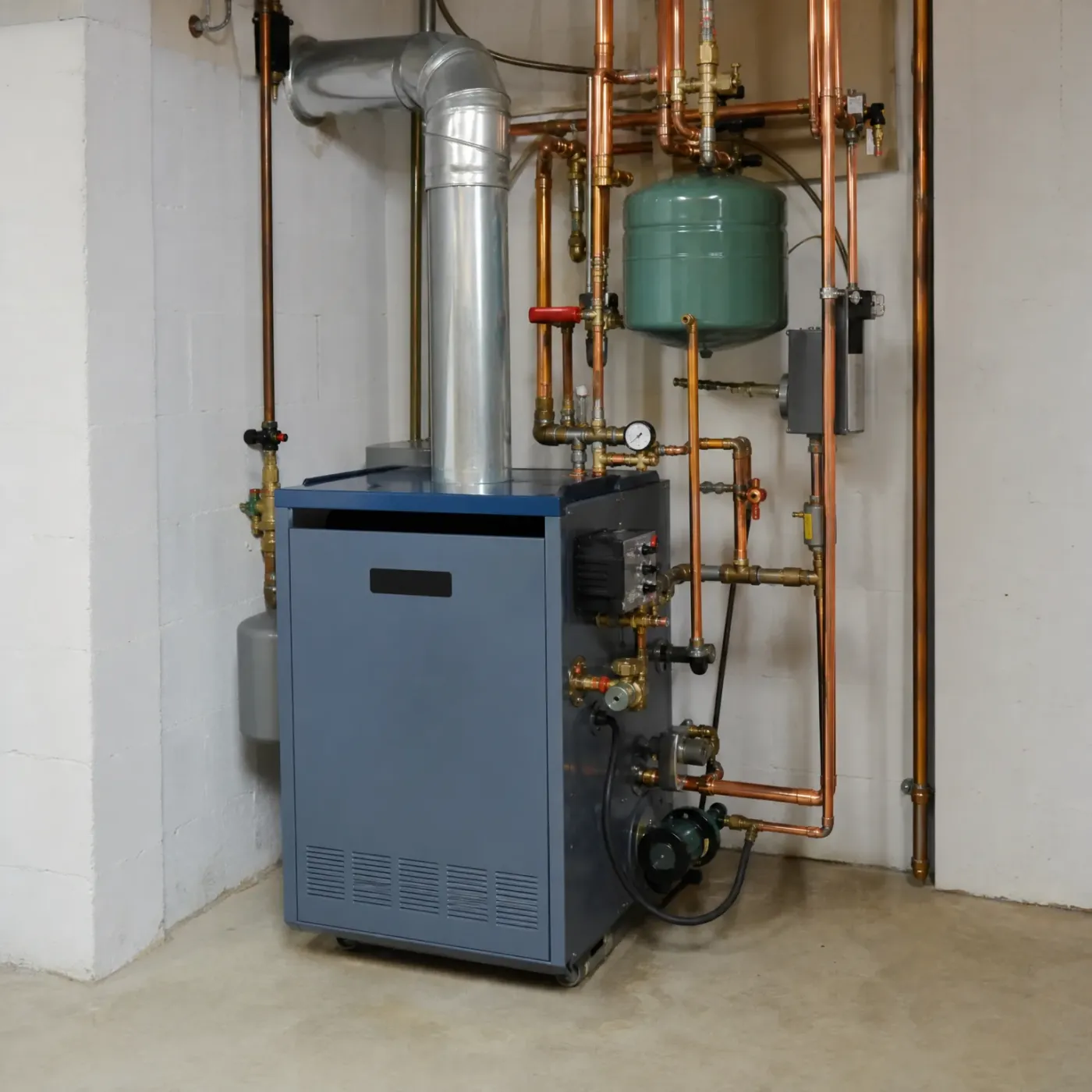
This is a boiler doing its job. The copper lines are tight, the pump and gauge are mounted clean, and the expansion tank on the wall is holding pressure like it should. Nothing here is improvised, and nothing is leaking.
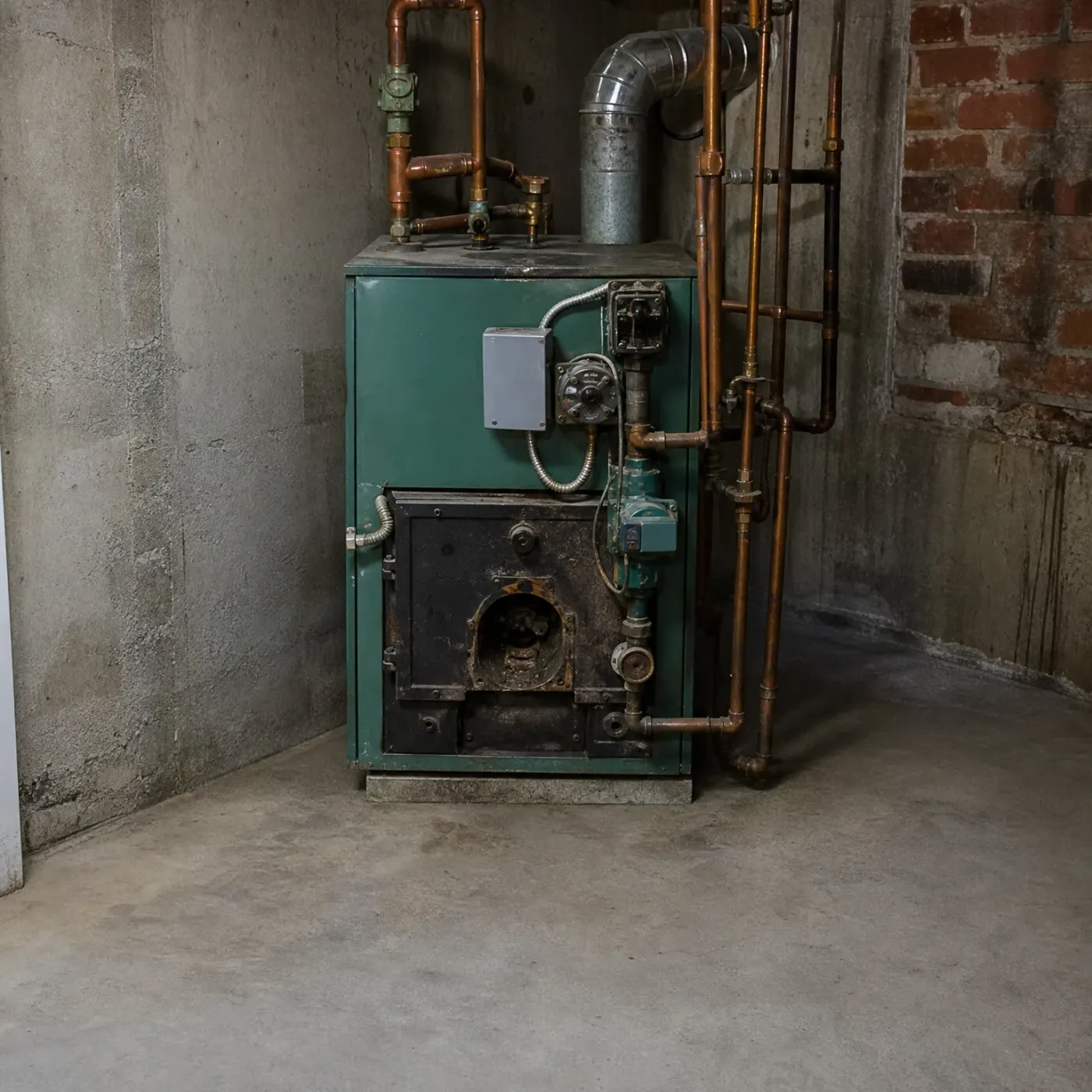
The firebox door on this one is corroded through, and that's not something a tech can patch. Once the metal itself goes, you're not looking at a repair. A unit in this shape needs to be replaced before it fails on a cold morning.


Nights here average 36°F in December, January and February, so your boiler isn't fighting deep cold the way one in the Northeast would. It cycles on to take the chill off, then rests. That's gentler duty, and it's a big part of why one installed and serviced right can hold up for so long.
NOAA nClimDiv 1991-2020 county normals weighted by homes
Cold water enters the boiler and the burner fires to heat it
Heated water or steam moves out through the supply piping
Zone valves open to send heat to the room calling for it
Water passes through radiators or baseboard, giving off heat

A boiler in Alabama holds up for 15 to 20 years when it was sized right for the house and someone has looked at it every year. That number drops fast if either of those didn't happen. Where you land in that range has more to do with the install and the upkeep than with the machine itself.
Because electric heat is the default here, boilers don't come up as often, and that's exactly why it helps to have someone local who already knows this equipment rather than someone guessing at it. A contractor who services boilers regularly in Alabama has seen what usually goes wrong in a house like yours and what a sound installation looks like. If you'd rather have a straight answer than wait and find out the hard way, you'll be matched with one licensed local contractor, not a handful of companies competing for your callback, and they'll reach out to look at your specific situation.


Get the right pro for your boiler