A boiler holding up its end
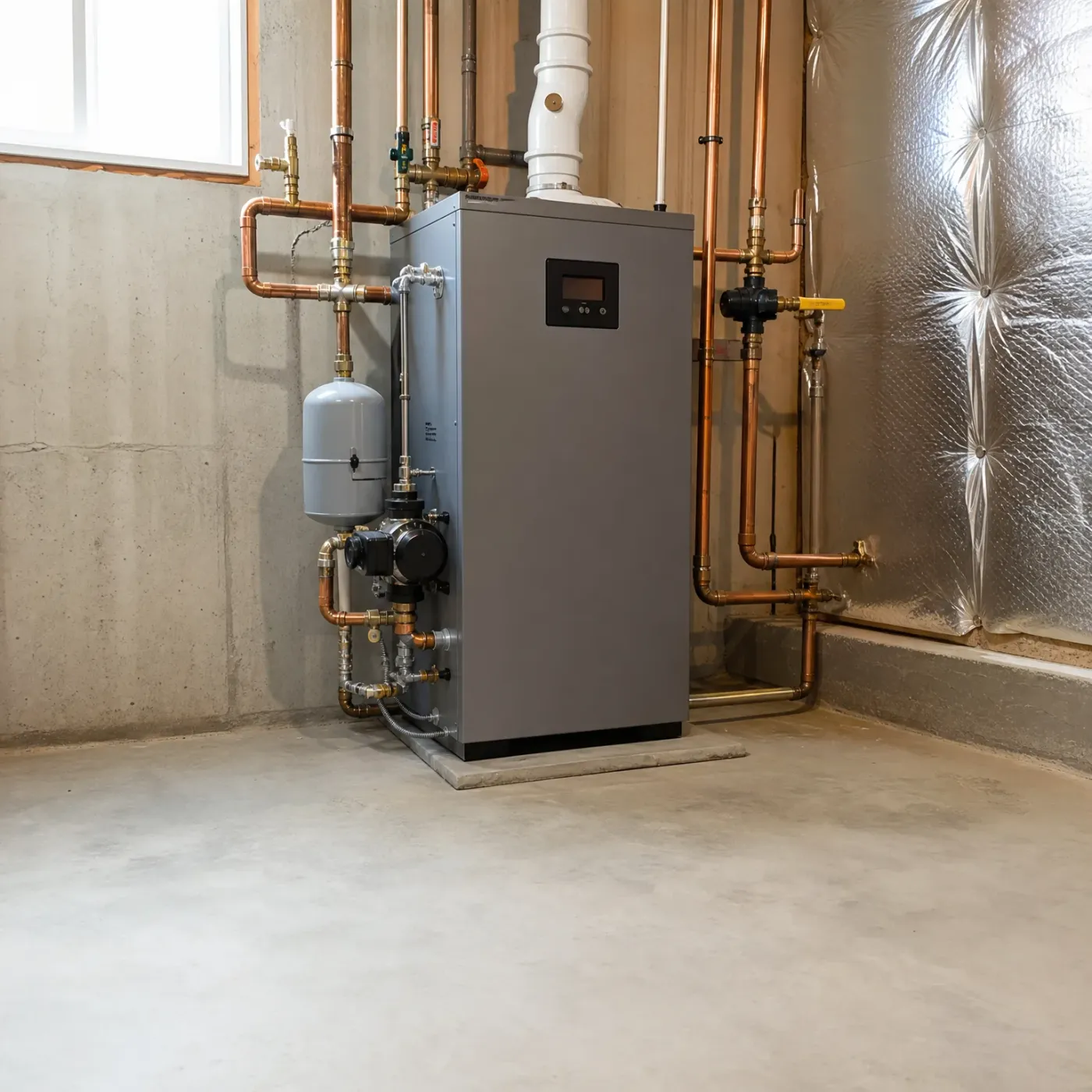
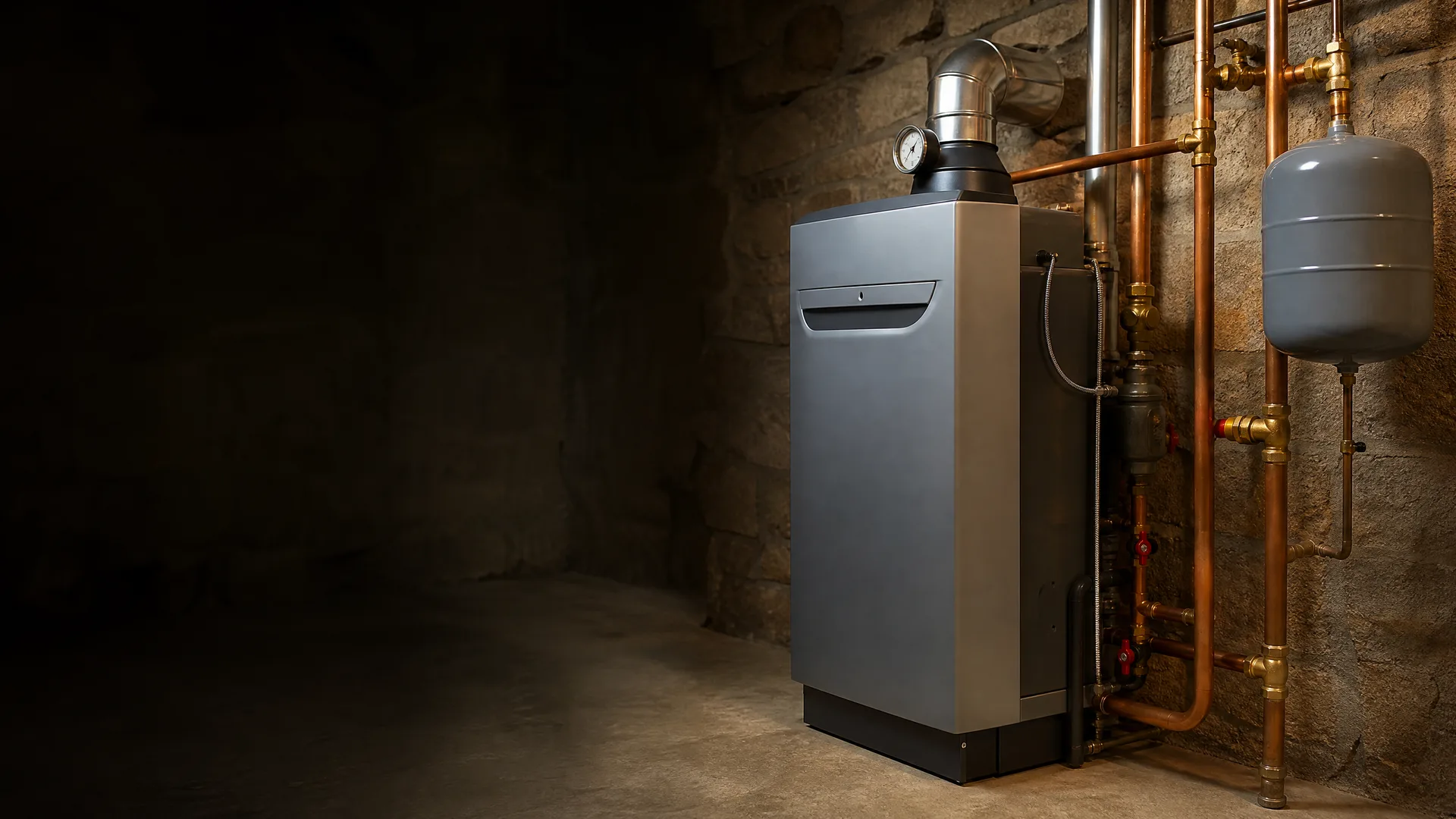
The copper piping is tight, the pressure gauge reads where it should, and the expansion tank is doing its job. A boiler kept like this isn't rushing toward a decision. It just needs someone to keep checking on it.
After you send the request, you're done searching.
I'm done searchingA boiler in Huntsville runs 15 to 20 years before it needs replacing. Most homes in Madison County heat with electricity, so a boiler here usually sits in an older house built with one, working alongside or instead of other heating equipment rather than as the only system fighting the cold. It still has to get through real winters, and the cycling that comes with cold snaps wears on the heat exchanger and the pump year after year. Once a boiler is near the end of that range, repairs start costing more and happening more often, and that's usually the sign it's time to replace rather than patch again. If yours came with the house and you don't know its age, a licensed contractor can check the nameplate and tell you where it stands.
Winter nights average 33°F
Winter nights average 33°F. Your boiler isn't fighting deep cold most nights, just steady chill, which is easier on a system over the long run.
Heat runs October through April
Heat runs October through April. That's close to seven months of cycling on and off, year after year, which adds up faster than people expect.
74.4% of homes heat with electricity
74.4% of homes heat with electricity. If your boiler runs on something else, it's likely paired with electric heat rather than carrying the house alone.
NOAA nClimDiv 1991-2020 · ACS 2020-2024
A boiler doesn't heat your tap water. It heats water in a closed loop, pumps it out to radiators or a coil, and brings it back to be heated again. That water stays inside the system for its whole life, so what shortens that life has more to do with the metal and the fittings than with anything coming out of a faucet. If the water feeding the loop is hard, it leaves scale on the inside of the heat exchanger year after year, and a scaled exchanger needs a hotter burner to move the same amount of heat. That extra strain adds up over a decade or two. Most of the actual breakdowns start somewhere smaller than the burner, though. The fittings and valves around the system sit under constant pressure, and a leak there is far more common than a cracked heat exchanger. The material of that exchanger still matters: cast iron sections hold up longer against corrosion than a steel exchanger does, given the same water running through them. There's also an expansion tank in the system, there to absorb the water as it heats and expands. When that tank wears out, the pressure relief valve starts taking on strain it wasn't meant to handle. A yearly check that tests pressure, flushes out sediment and confirms the relief valve still works catches most of this before it turns into a failure.




A boiler this old is the kind that starts asking for repairs more often than it used to, and each one costs something while the next one is never far behind. If yours is in that stretch, or close to it, you have a decision sitting in front of you that most people in Huntsville don't get to put off for long once a boiler starts failing in winter. Finding someone to look at it, size a new one correctly, and give you a straight answer takes time most homeowners don't have to spare: calling around, waiting on callbacks, explaining the same thing to three or four different people before you even get a number to compare. Sending this request means you stop doing that part. You're not chasing anyone down or sitting with your coat on waiting for a callback that may or may not come. The rest of your week goes back to being about your week, not about tracking down a contractor.
Most boilers in Madison County don't fail outright. The heat exchanger scales up over the years, the burner works harder to push heat through it, and efficiency drops before the unit ever quits. What actually ends the job is usually a cracked heat exchanger or a leak in the sealed loop that isn't worth chasing anymore. Once a boiler reaches that point, a contractor is weighing the cost of a repair against a system that's still going to need another repair in a year or two. That's the math that decides replacement, not a date on the calendar.
A boiler's water never sees the outside air, so Huntsville's muggy summers don't touch it the way they wear on an air conditioner's coil. What shortens a boiler's life here is what's inside that loop: mineral buildup from hard water, or a system that was never flushed after installation. A clean, sealed loop lets the heat exchanger run efficiently for the full stretch, often the better part of two decades. A neglected one scales up early and forces the burner to work past where it should, which is why two boilers of the same age can be in very different shape.


A boiler running past 20 years in Huntsville isn't a bargain. It's a cast-iron section or a corroded flue away from a failure that happens on the coldest night of the year, not the most convenient one.
When it goes, you're not choosing a contractor with a clear head. You're calling around cold, explaining the same problem to every voicemail, while the house sits without heat.
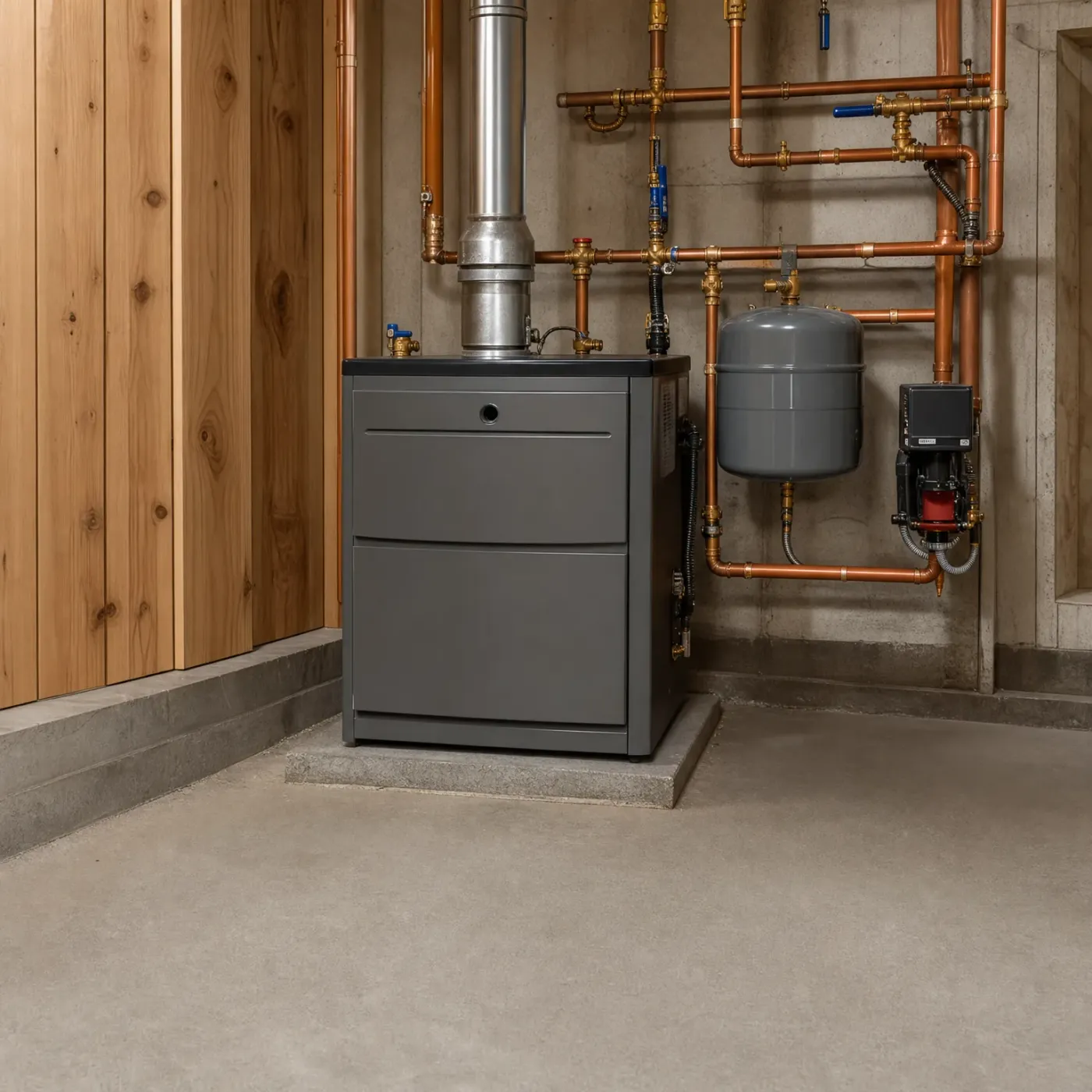
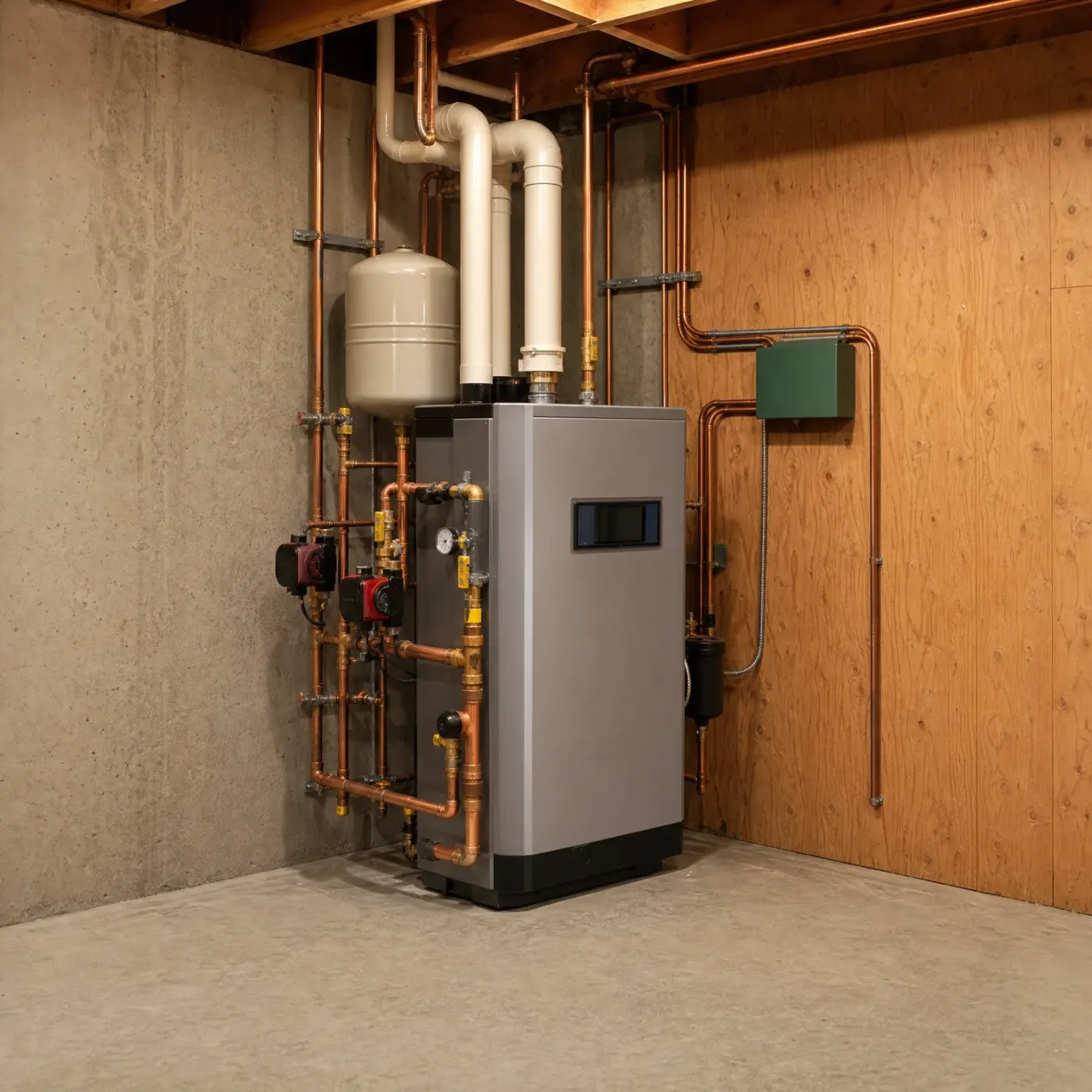
The copper piping is tight, the pressure gauge reads where it should, and the expansion tank is doing its job. A boiler kept like this isn't rushing toward a decision. It just needs someone to keep checking on it.
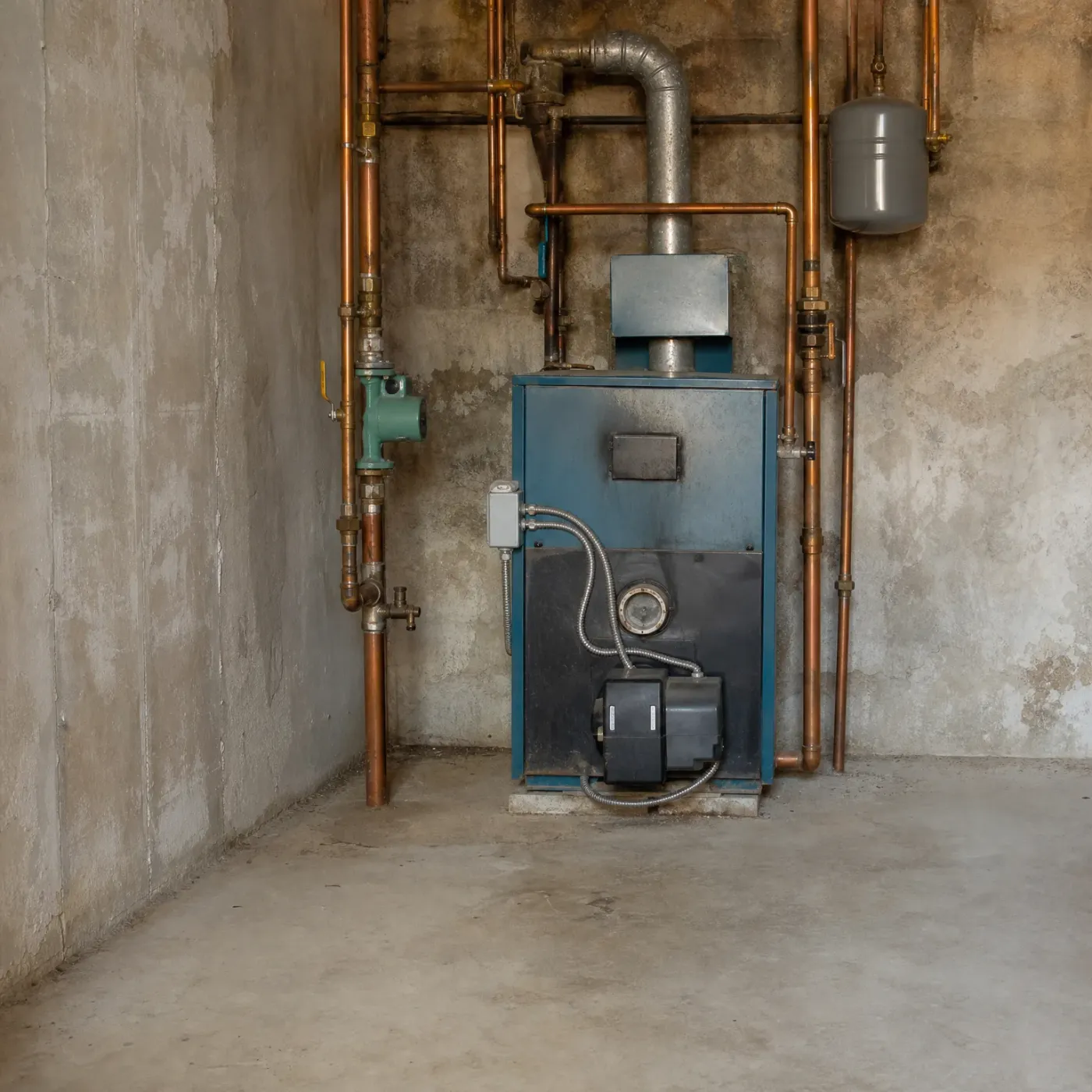
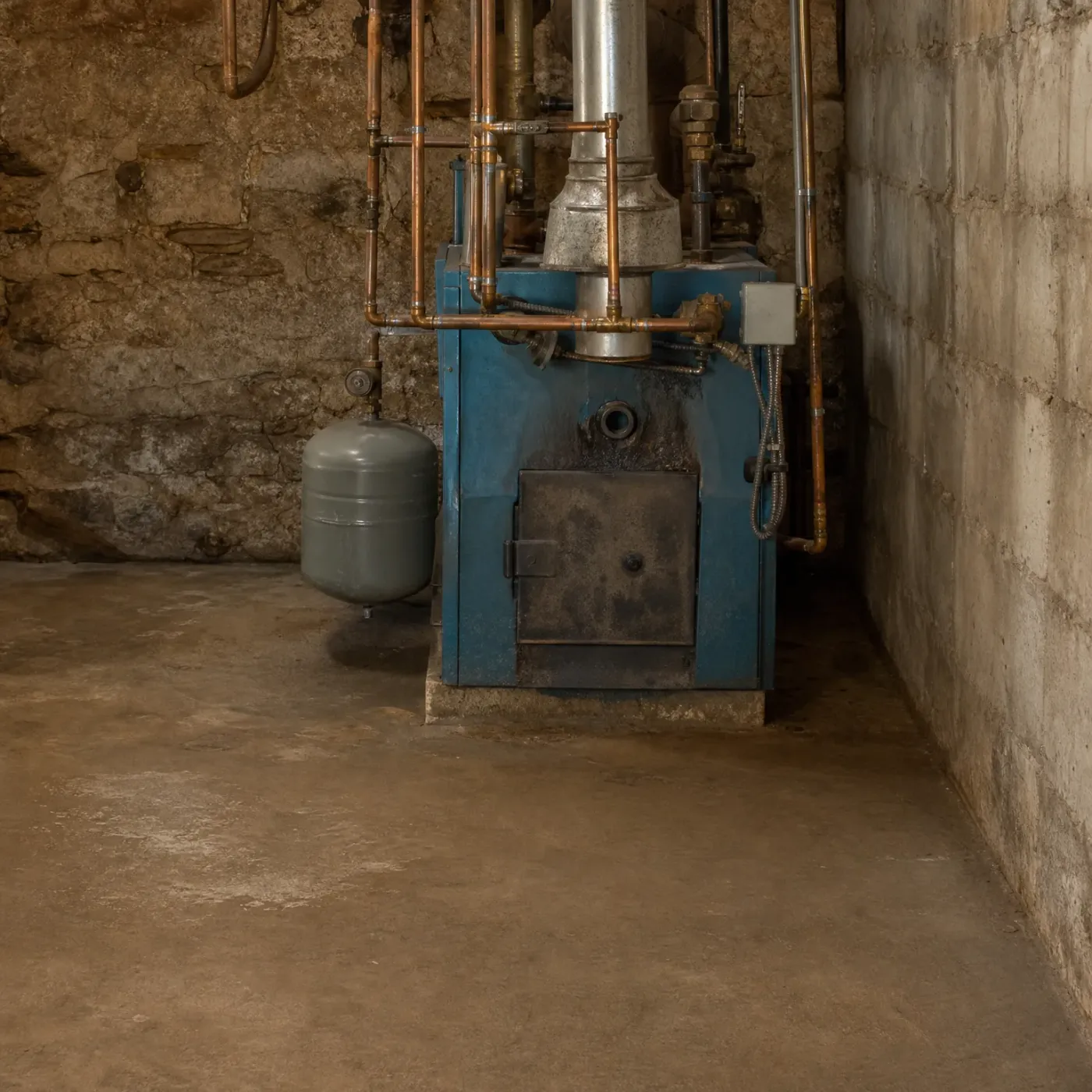
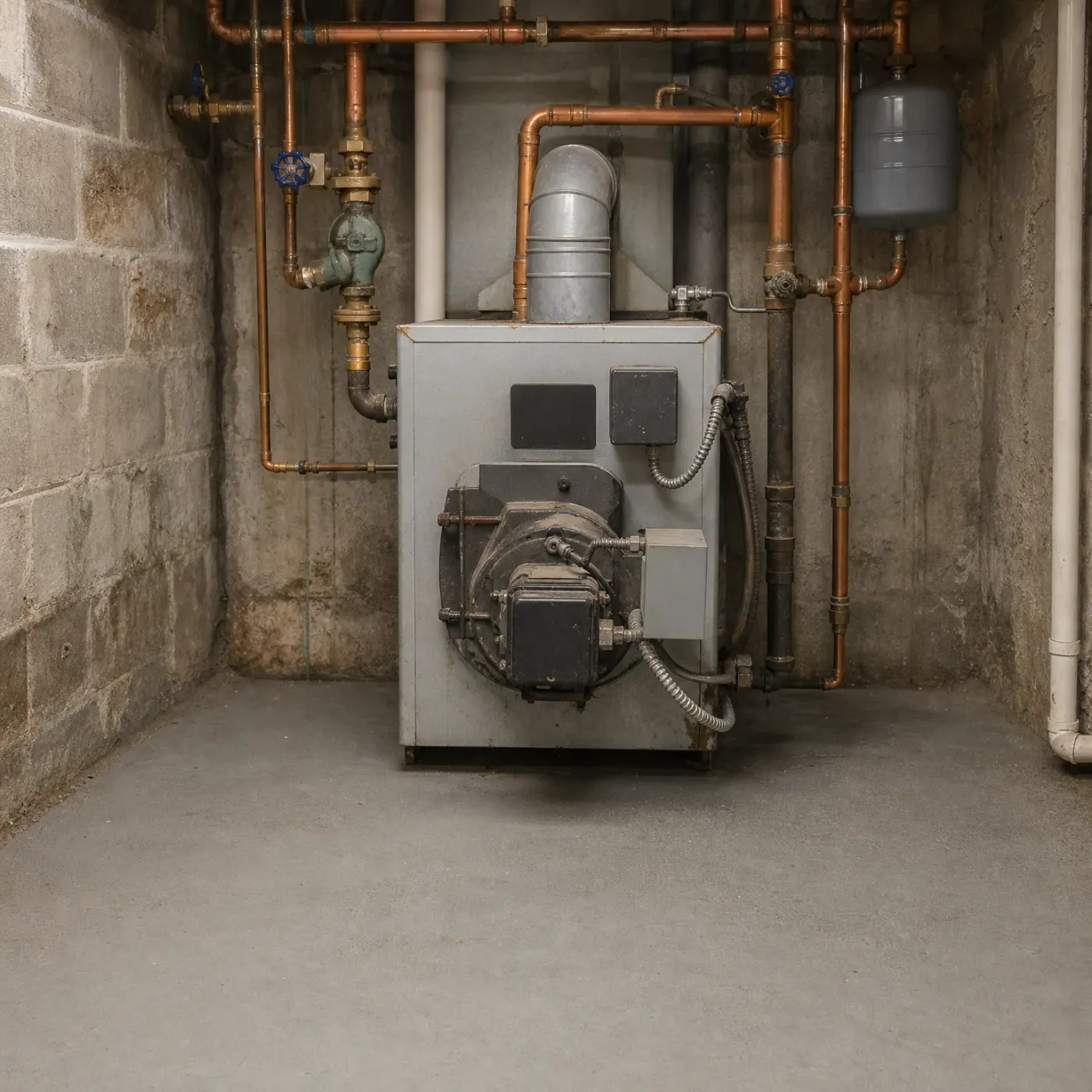
Bare concrete, a galvanized flue, flexible fuel lines standing in for what should be fixed piping. Nothing here looks like it's about to quit this week. But this is what the stretch before a cold-night failure usually looks like from the outside.
33°F isn't hard on cast iron or copper the way a deep freeze is. Your boiler cycles on, holds a steady loop temperature, and shuts off again without the strain a harder cold would put on the heat exchanger.
NOAA nClimDiv 1991-2020
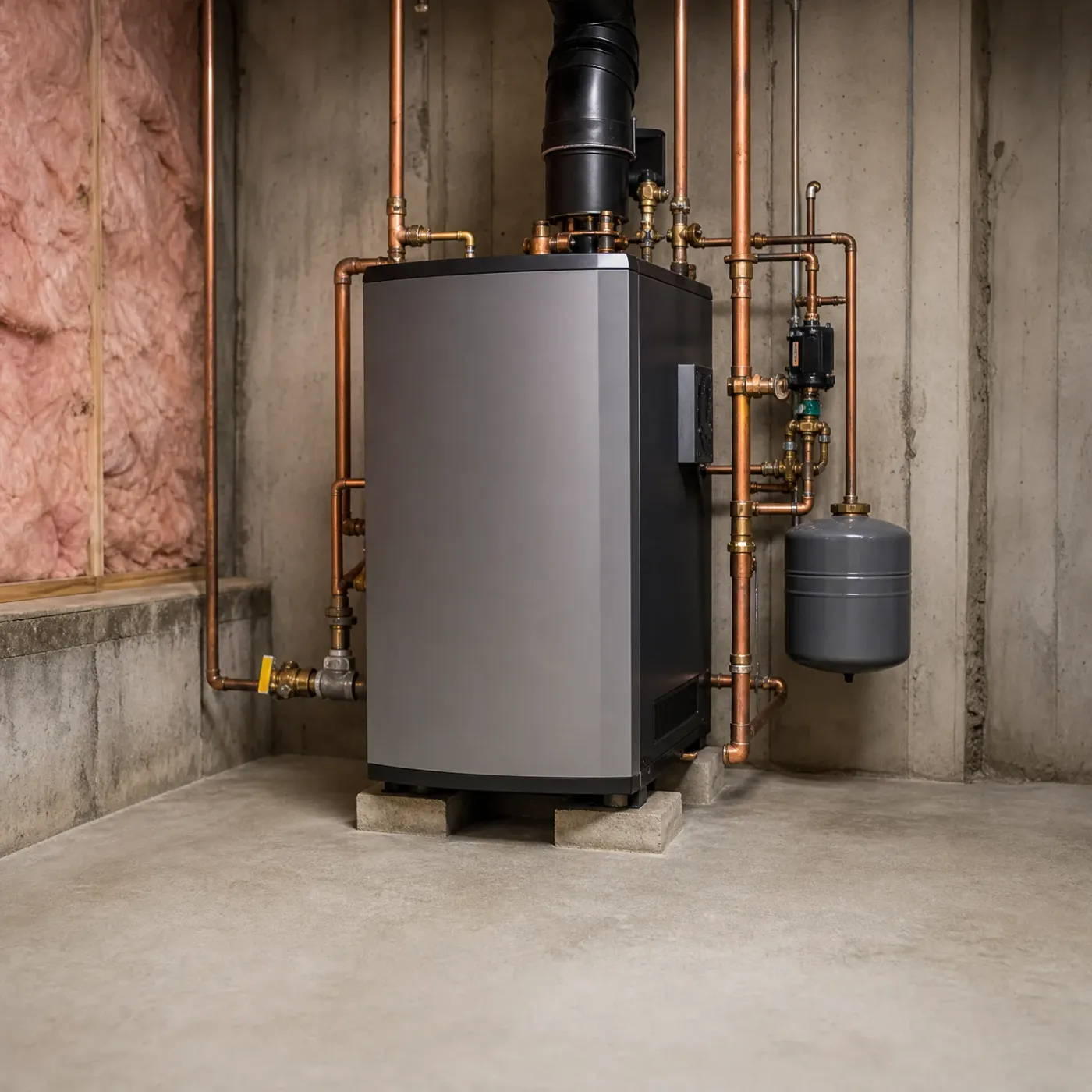
The copper lines run tight to the circulator pump, the expansion tank holds its charge, and the flue vents clean. A boiler set up like this one is doing the job quietly, no shortcuts, nothing jury-rigged to keep it going.
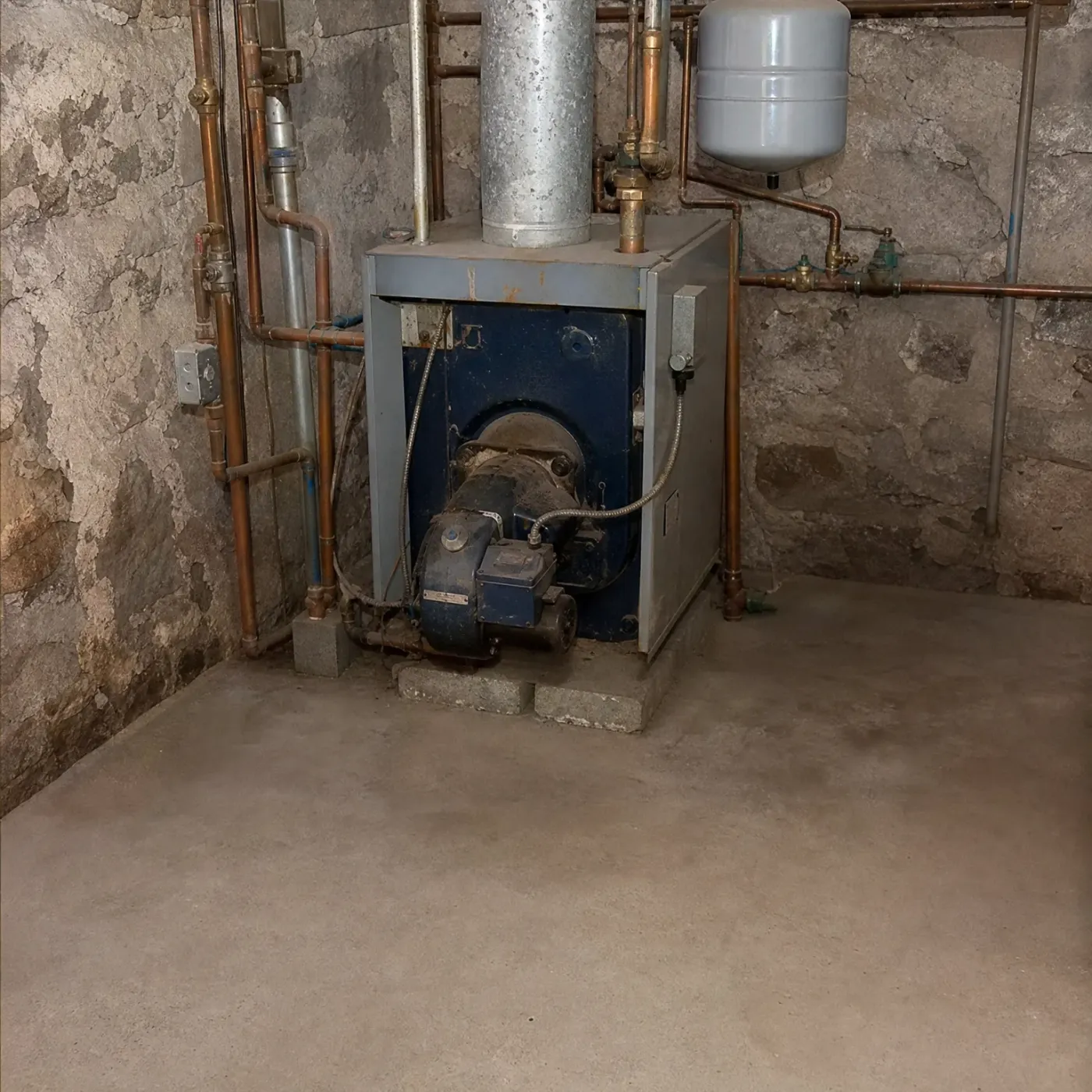
Set up on concrete blocks with a galvanized flue and stone walls holding the damp, this one is past the point of looking right. An oil-fired unit sitting like this is closer to the end than the middle, whatever the pressure gauge still says.

A boiler in Huntsville lasts 15 to 20 years. Madison County winters are mild enough that the system isn't straining most nights, and that's most of why one lasts this long here. Past 20 years, you're not maintaining a boiler anymore. You're waiting to see which part goes first, and whether it happens in October or on a night in January when every other boiler in the county is working just as hard.
If yours is getting close to that mark, or past it, the question isn't whether to replace it. It's who does the installation and when. You could spend your evenings calling around, explaining the same thing to four different contractors, and sorting through quotes that don't line up with each other. Or you could send one form and let that part of it be someone else's job. Either way the boiler gets replaced. One way just costs you a lot less of your own time.

It's off your list after this