Skip calling around
Repair or replace an old boiler in Alabama
Boilers are less common in Alabama, since most homes here heat with electricity, so finding someone who still works on them regularly takes more digging. A boiler that's acting up or getting old raises the same question either way: fix what's wrong or put in a new one. This page walks through how to tell, so you're not stuck calling around to different companies and repeating the same story about your system to each one.
Describe it onceA boiler past 15 years old is usually worth replacing rather than repairing again, especially once the heat exchanger itself is the problem instead of a part bolted to it. Boilers run a long time compared to other heating equipment, but the cost of keeping one alive climbs each time it fails, and parts get harder to find the older the unit gets. In Alabama that math matters more than usual, because boilers are uncommon here and a contractor who still stocks parts for one or knows its quirks isn't on every corner. If your boiler is younger and the failure is a single part, a repair can make sense. If it's old, or this isn't the first repair, replacing it ends the pattern of paying to fix something that's going to fail again in a different spot next year.
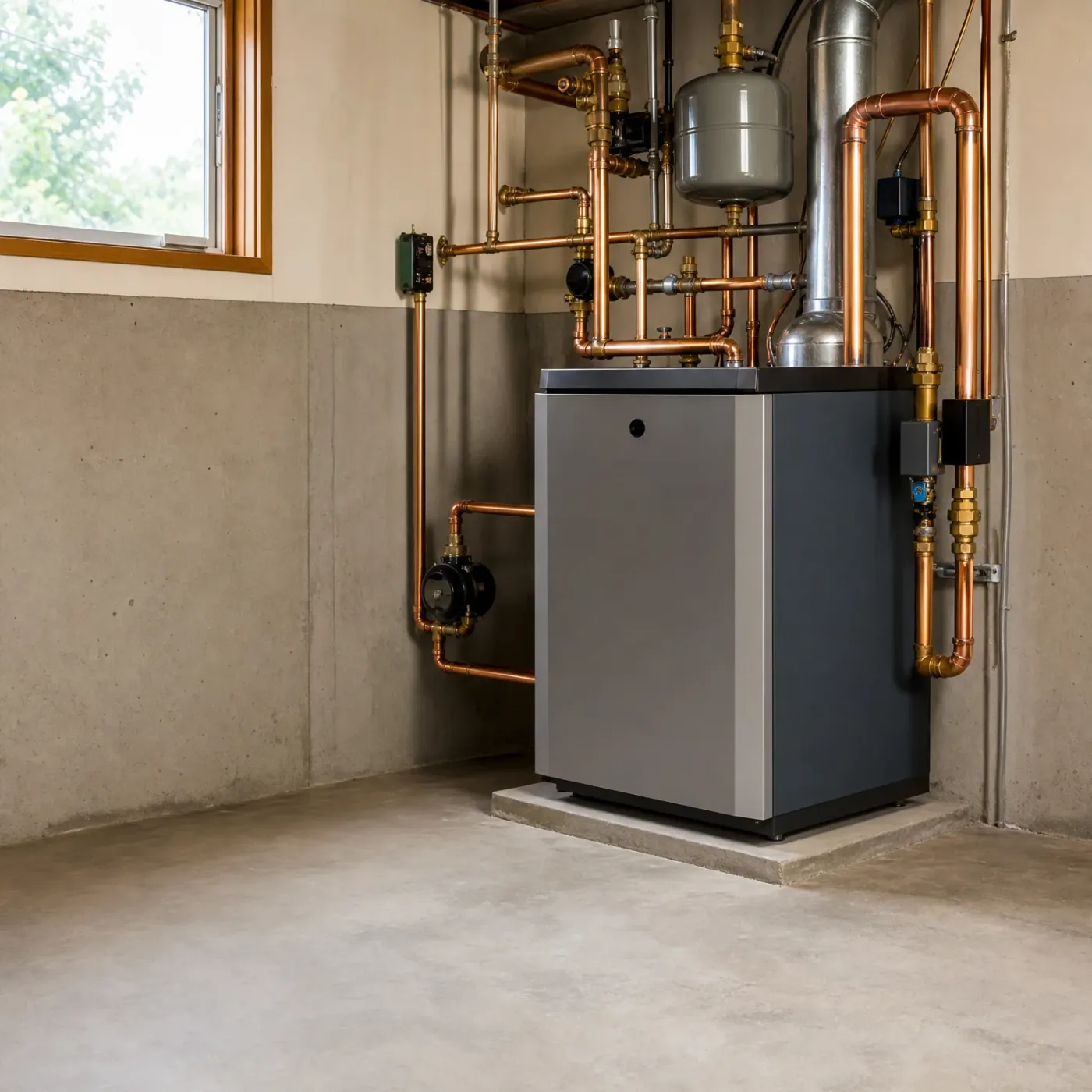
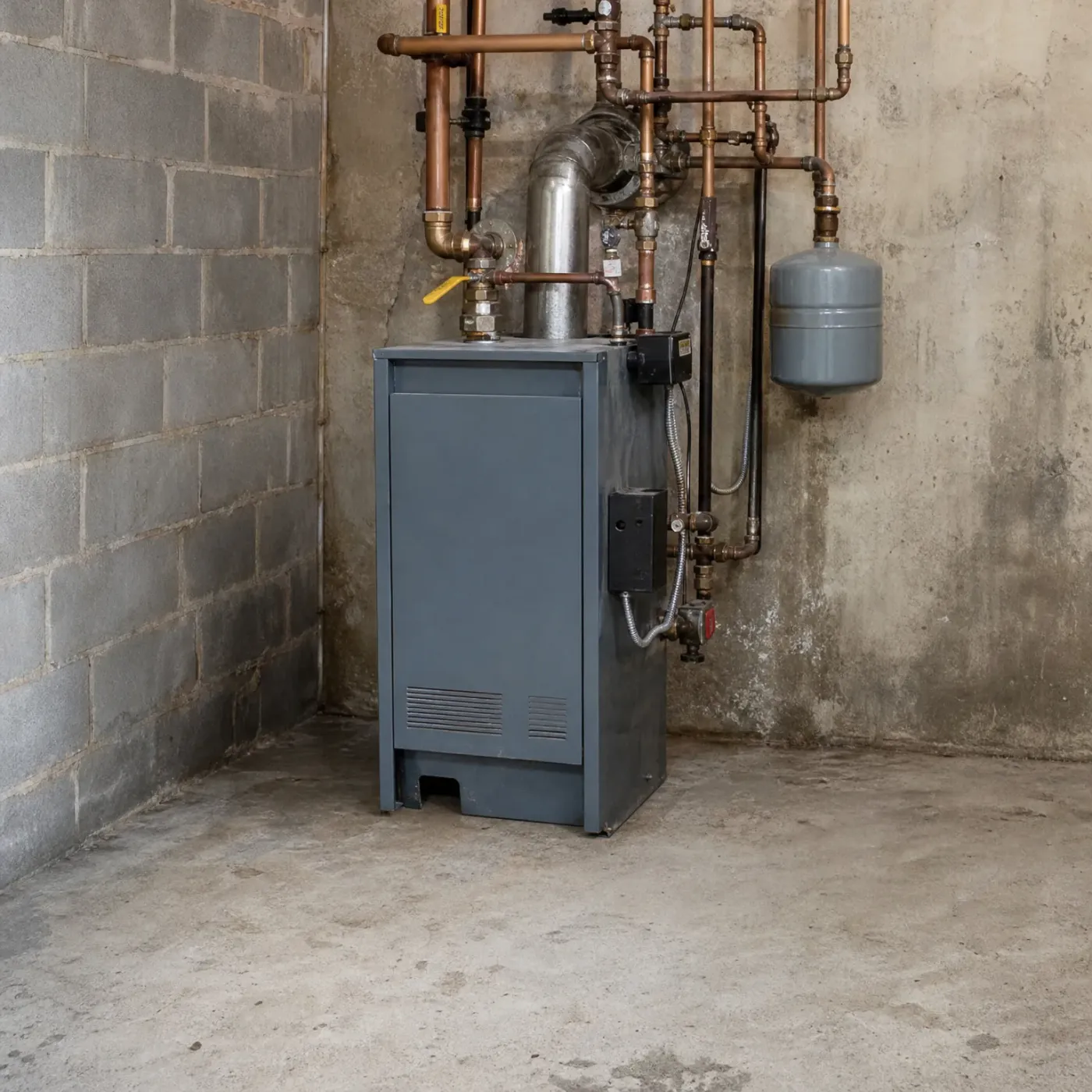
A boiler doesn't push warm air through your house. It heats water, keeps it moving through a closed loop, and sends it out to radiators or a coil, so the piping layout matters as much as the unit itself. The circulator pump does the work of getting that heat to every room. When one room stays cold while the rest of the house is fine, the pump is worth checking before anyone assumes the burner is dying. The pressure gauge tells its own story. A reading that keeps dropping points to a slow leak somewhere in the loop, and an expansion tank that's taken on water instead of air will push the relief valve to drip during normal cycles. Rust-tinted water or a damp spot near the heat exchanger shows corrosion is already underway, well before the boiler stops making heat. None of this is guesswork for someone who installs these regularly, and it's also why a replacement has to be sized to what your home actually loses in heat, not just swapped in to match the old unit's rating.
How a boiler actually heats your home
- A boiler heats water in a sealed loop and sends it through pipes to radiators or a coil, unlike a furnace that moves air through ducts.
- The circulator pump, not the burner, decides whether heat actually reaches the far end of the house, so a failing pump can mimic a dead burner.
- Low water pressure on the gauge usually means a slow leak somewhere in the system, not a problem with the boiler itself.
- An expansion tank that's waterlogged instead of holding air will cause the pressure relief valve to drip or spit on every heating cycle.
- Corrosion inside the heat exchanger shows up as rust-colored water or a pinhole leak long before the unit stops producing heat entirely.
- A new boiler has to be sized to the home's actual heat loss, not just matched to the old unit's output, or it runs inefficiently from day one.




Describe it once
Your request goes to one pro, not a list of companies.
Skip collecting and comparing quotes for the new boiler.
You're not committing to anything by asking.
Fix the Part or Replace the Boiler
Repair
- A circulator pump, zone valve, or igniter can usually be replaced without touching the heat exchanger, and the boiler goes back to running like it did before.
- If the boiler is under 15 years old and this is the first real repair it's needed, fixing the part in front of you is the cheaper path.
- A repair buys time if you're not ready to plan an installation right now, as long as the tank itself isn't the problem.
- Parts for a boiler that's still a common model are easier to source, which keeps a repair from turning into a long wait.
- Repairing doesn't reset the clock on the unit's age, so a second failure a year or two later is always possible.
Replace
- Once the heat exchanger is leaking or cracked, there's no part to swap in, and replacement is the only real option left.
- A new boiler installed properly is sized and set up for your home's actual heat load, not whatever was specified years ago.
- Given how expensive electricity runs in Alabama, a boiler that's lost efficiency from age is costing you more every month it stays in.
- Finding someone who installs boilers regularly in Alabama takes more legwork than finding an AC contractor, since fewer homes here use them.
- Replacing means you're not back in the same spot next winter wondering if the next part is the one that finally gives out.

Cold water fills the boiler through a feed valve.
The burner fires and heats water in the sealed loop.
The circulator pump pushes hot water out to radiators or a coil.
Water gives up its heat, then returns to the boiler cooler.
Why does my boiler make a banging or kettling noise?
Why does my boiler make a banging or kettling noise?
It's scale building up on the heat exchanger
That banging, sometimes called kettling, is water boiling against a layer of mineral scale coating the inside of the heat exchanger. The scale insulates the metal, so the water touching it flashes to steam before the rest of the water heats up, and the popping is those steam pockets collapsing. It gets louder as the scale builds. On its own this isn't an emergency, but it means the heat exchanger is working harder than it should, and it's the kind of wear that pushes a boiler toward the point where the exchanger itself fails rather than some part attached to it. A contractor can flush the system and tell you how much buildup is actually in there.


Winter nights average 36°F statewide
36°F doesn't sound harsh, but it's enough that a boiler on its last legs runs most nights from December through February to keep up. If yours is already struggling, that's a long stretch to be leaning on a weak heat exchanger or a pump that's starting to fail.
NOAA nClimDiv 1991-2020 county normals weighted by homes

Repair it or replace it, the answer is in the boiler itself
A boiler under 15 years old with a failed pump, valve, or igniter is worth fixing. A boiler past that age, or one with rust on the tank or a heat exchanger that's starting to leak, is telling you the next repair won't be the last one. That's the whole question, and you can check your own boiler against it.
Boiler work isn't something every heating company does, since most homes in Alabama heat with electricity and fewer contractors keep up the skill. Finding one who installs and services boilers regularly, and knows which brands hold up and which fittings tend to fail first, usually means calling around and explaining the same thing more than once. Submitting here sends your situation to one local contractor who already does this work, so you're not sorting through quotes from companies that only handle boilers occasionally.

No phone calls to make
One installer gets your project, so there's no bidding war over it.