When to replace a boiler in Huntsville, AL

Step 1 of 3: Equipment

When should I replace my boiler in Huntsville?

Boilers aren't common in Madison County, since most homes here heat with electricity, so if you've got one, it's likely an older house or a system someone chose on purpose. You're probably not asking because it broke down today. You're asking because you've noticed it struggling, or it's getting old, and you don't want to be without heat on the first cold night in December.

Replace it once repairs get frequent or the heat exchanger is rusting, not before

A boiler that's still heating evenly and hasn't needed more than an occasional repair can usually stay in service. The signs to watch for are repeat breakdowns in the same winter, rust or leaking around the heat exchanger, or rooms that used to heat fine now taking much longer. Winters in Huntsville get cold enough that a boiler on its way out tends to show it: short cycling, pilot or ignition problems, or a jump in the gas bill for the same amount of heat. Since boilers aren't the common setup here, parts can take longer to source than they would for a furnace, which is one more reason not to wait for a full breakdown in January to start looking into a replacement.

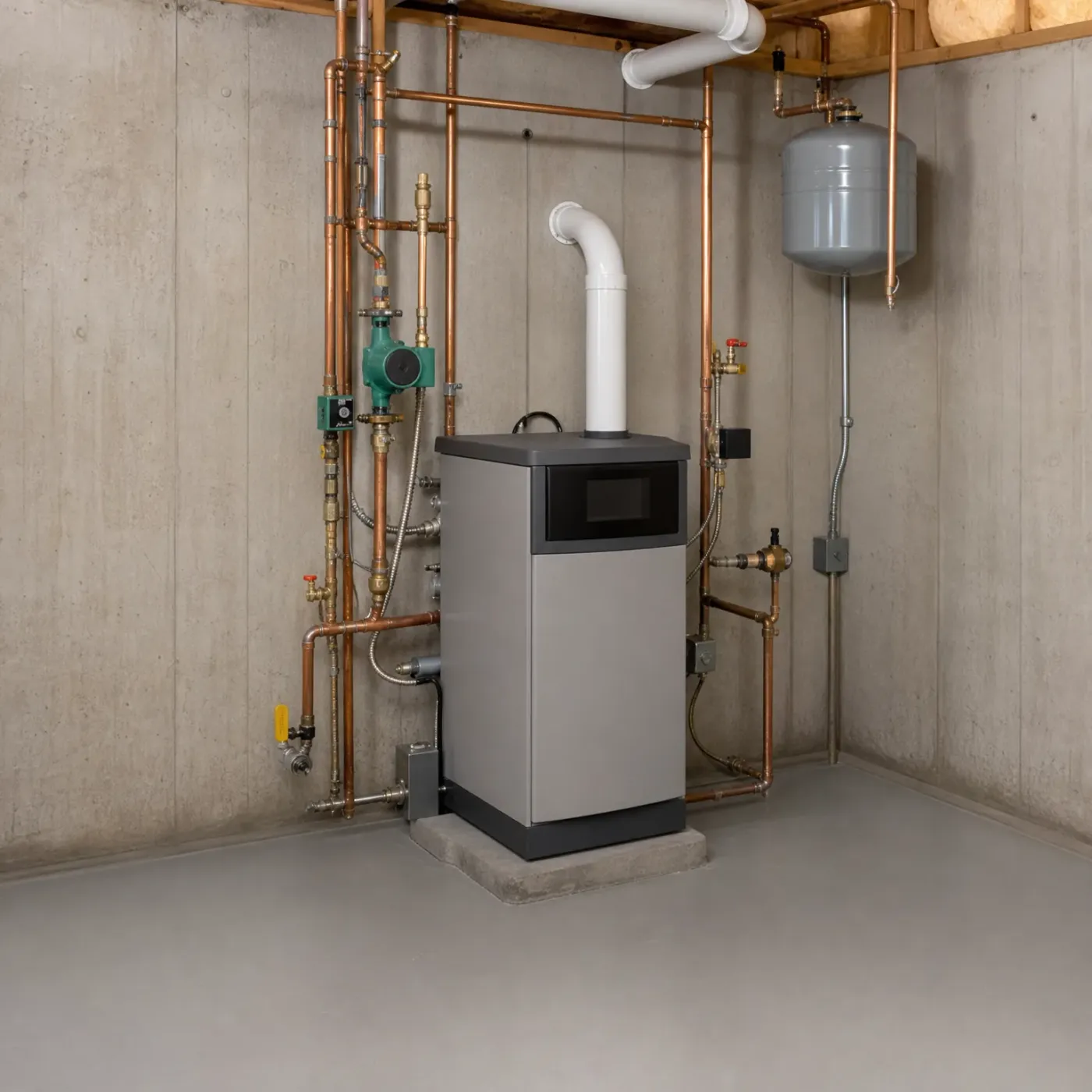
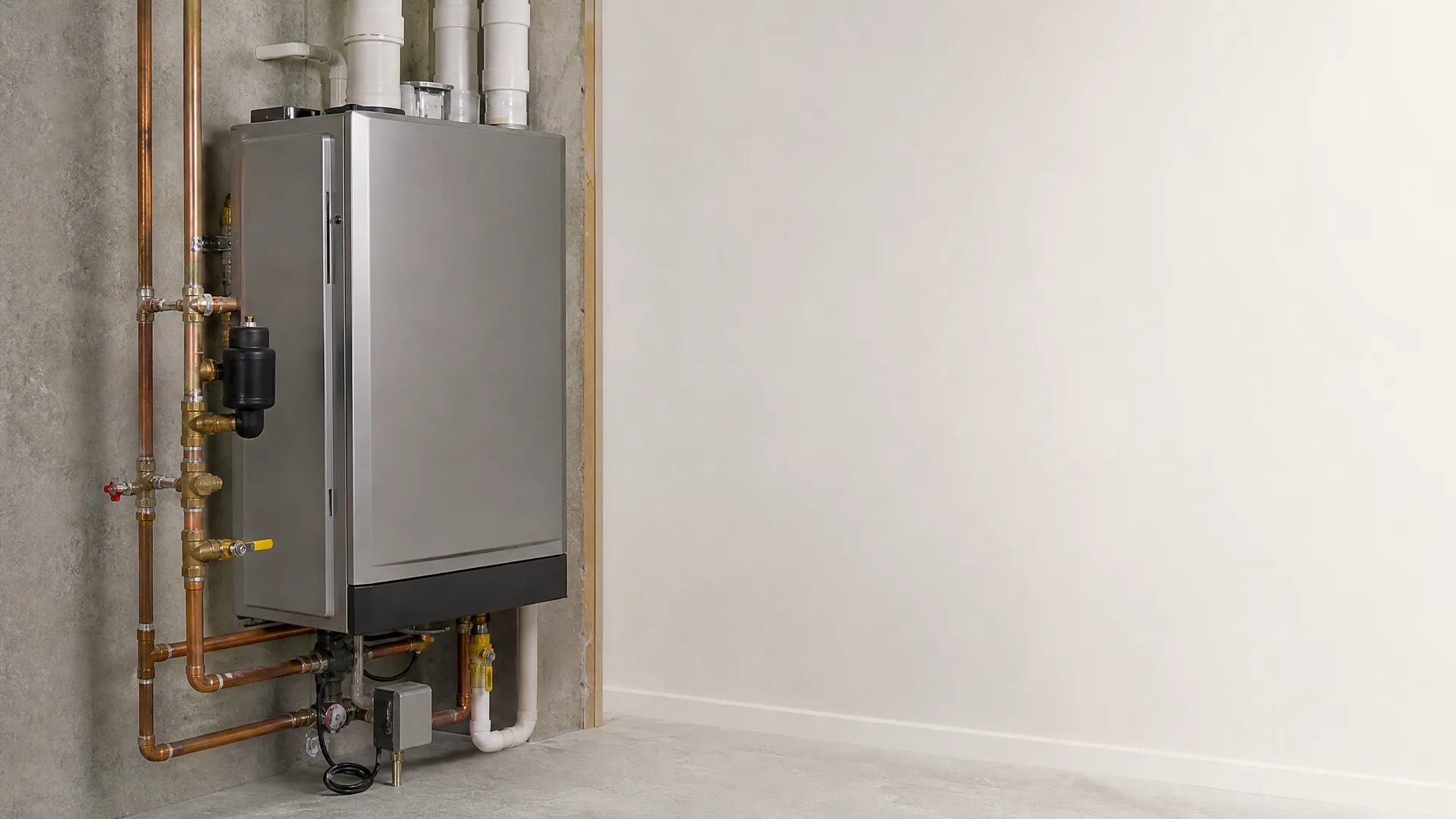
A wall-mounted grey boiler with copper pipework and white flue pipes installed against a concrete wall in an empty room with a plain pale wall to the right.

What shortens a boiler's life

A boiler fails earlier when the heat exchanger cracks or the system has run on the same water for years without fresh treatment. Mineral buildup inside the exchanger forces it to work harder to heat the same water, and that strain is what ends up cracking it. Once a crack shows up, the unit needs replacing, not patching. If yours is original to an older Huntsville house, this is usually how it goes.

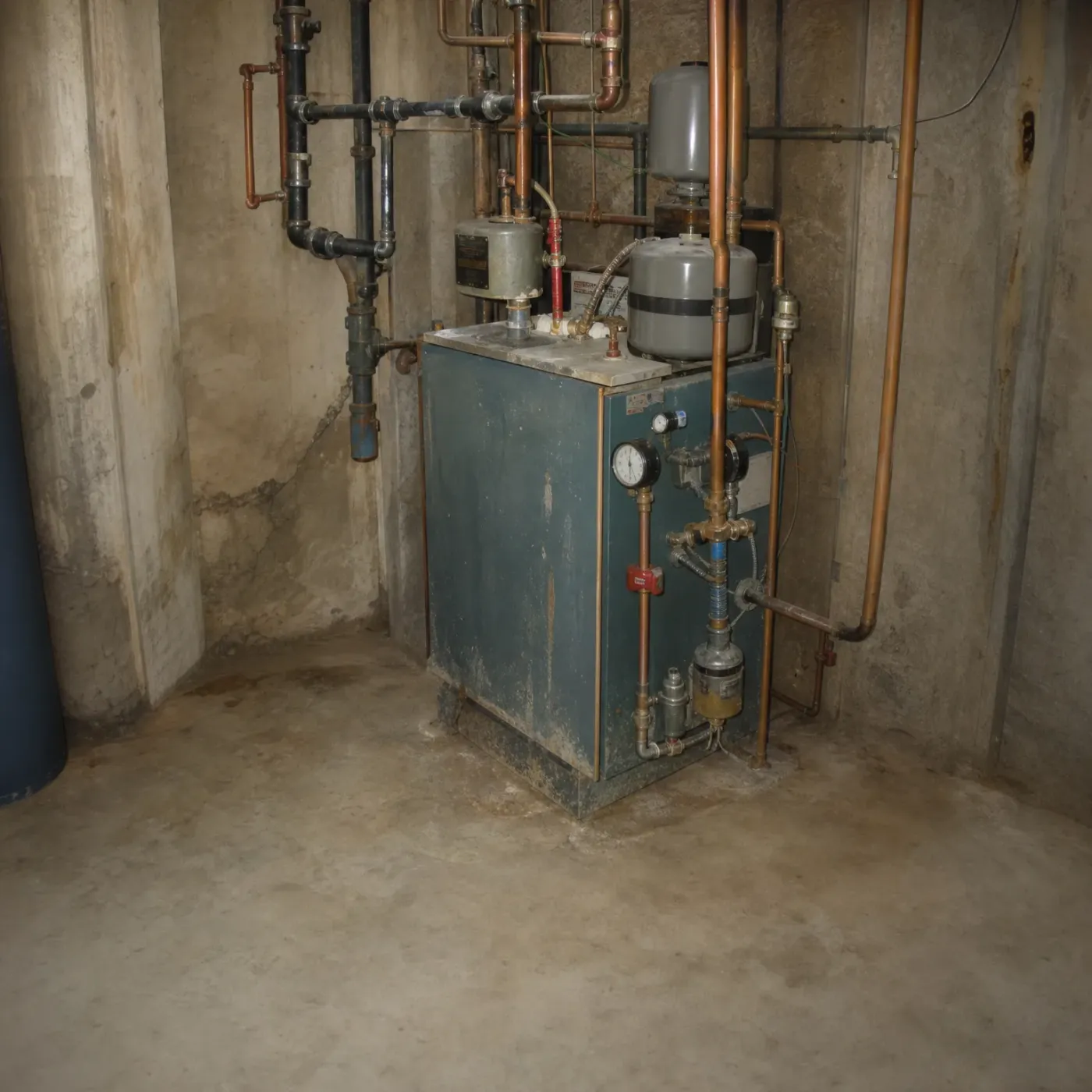
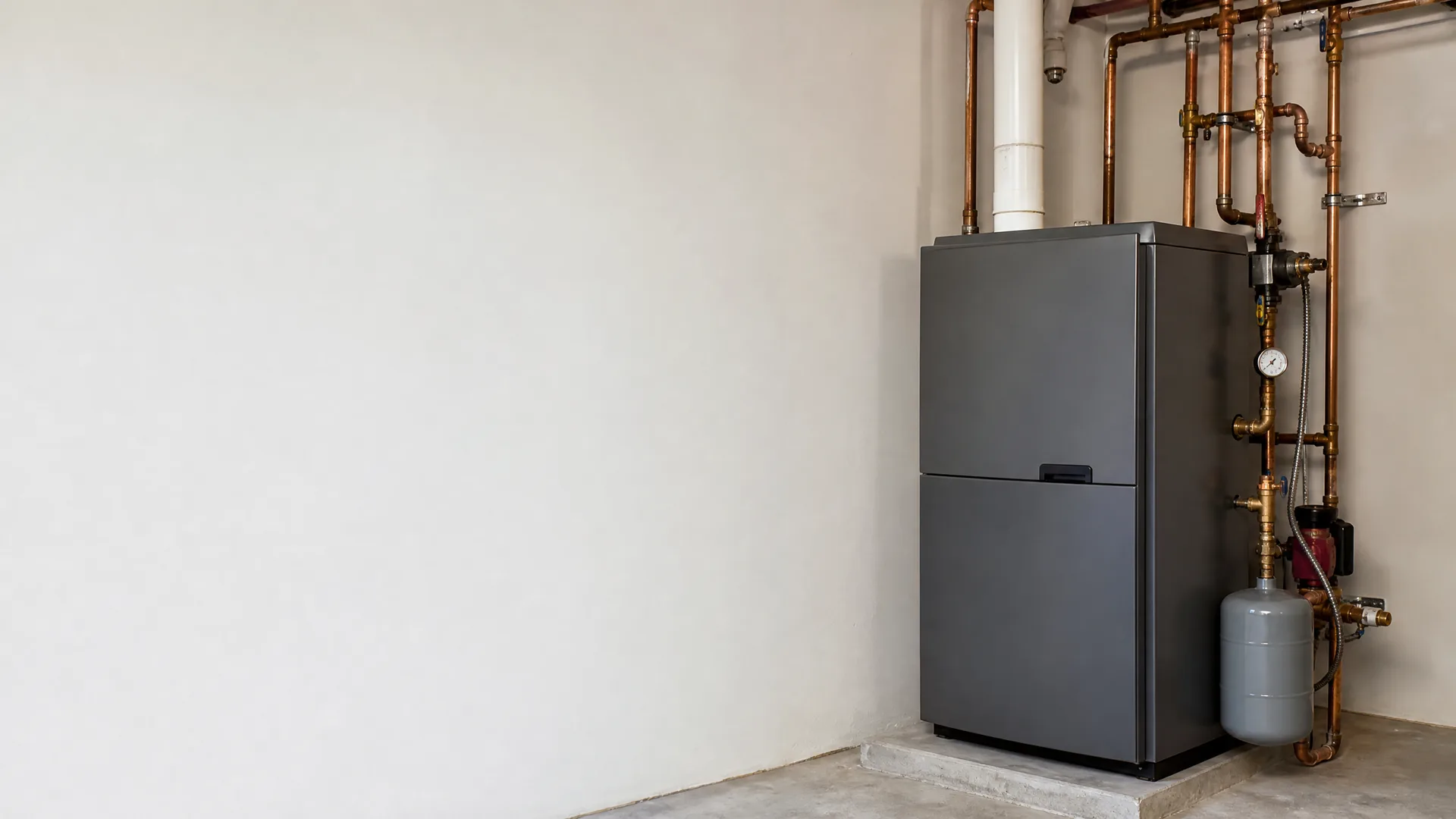
A dark grey boiler unit stands on a concrete pad against a plain light wall, connected to copper pipes, a pressure gauge, a pump and a grey expansion tank.

Why gas boilers are rare here

Most houses in Madison County heat with electricity, so a gas boiler usually means the house was built with one or a prior owner installed it on purpose. That matters for replacement because gas boiler parts and the contractors who service them are harder to find locally than the parts for an electric furnace or heat pump. When one of these fails in January, sourcing the right part can take longer than it would for more common equipment.

What does winter actually ask of your boiler here?

  • Winter nights average 33°F

    Overnight lows average 33°F in December, January and February, so your boiler is working against the cold most nights, not just on the rare freeze.

  • Heat runs October through April

    Heat runs October through April here, about seven months. That's seven months your boiler has to start, run and hold up without a break.

  • 74.4% of homes heat with electricity

    Only 74.4% of homes in Madison County heat with electricity, which means yours is already the less common setup, and it has to carry real winter work on its own.

NOAA nClimDiv 1991-2020 · ACS 2020-2024

Repair still makes sense

If the heat exchanger is sound and the boiler is only acting up here and there, a repair gets you through the winter without much argument. A pilot that won't hold, a circulator pump that's gone noisy, a thermocouple that's failed, these are parts a contractor can replace without touching the exchanger itself. If this is the first real problem you've had with it and the rest of the system is still doing its job, fixing what broke costs you less trouble than starting over. Age alone isn't a reason to replace a boiler that's still heating evenly and holding pressure the way it should.
Replacement is the honest call

Once the heat exchanger is cracked, there's no repairing around it. That part is the boiler, and a cracked one means the unit is done, no matter how new everything else attached to it looks. The same goes for a system that's needed a repair every winter for the past few years. You're not fixing a boiler at that point, you're renting one a few months at a time. If yours is starting to look like that, a straight replacement saves you from paying for the same failure twice.

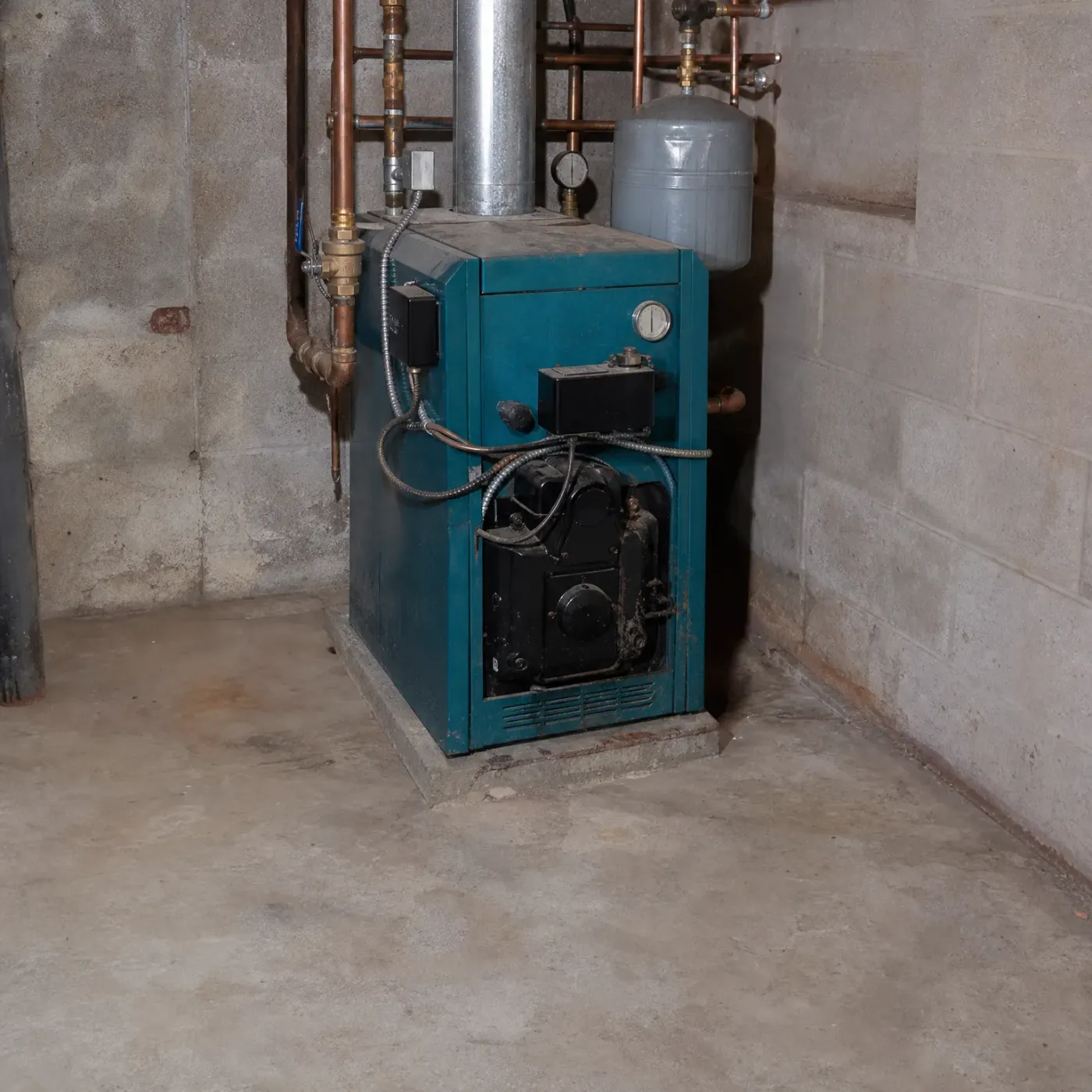
A teal boiler with a pressure gauge and black burner unit sits on a concrete pad in a basement corner, with copper pipes, a flue vent, and a gray expansion tank above against concrete block walls.
Before you get your boiler installation
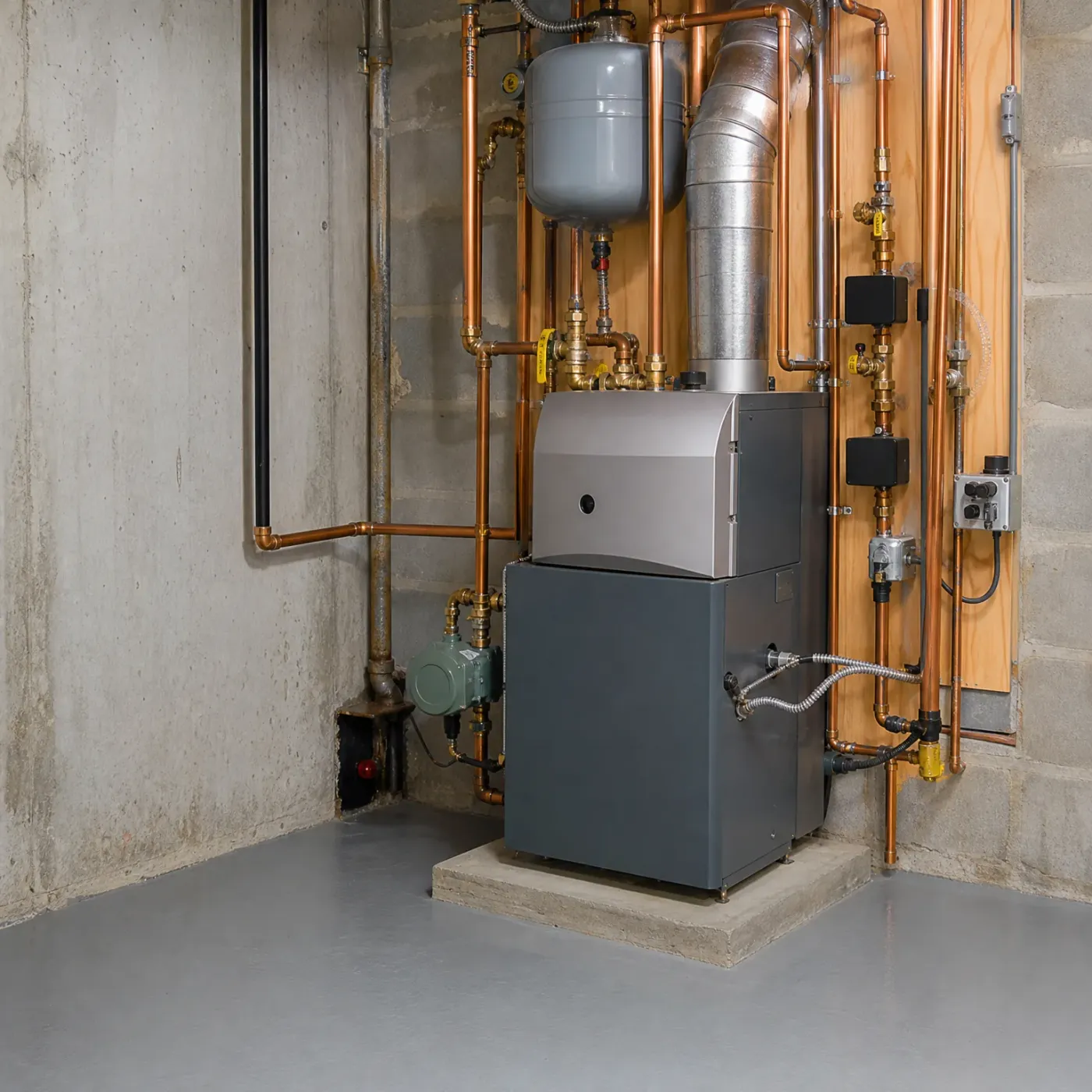
A gray residential boiler on a concrete pad in a basement corner, connected to copper piping, an expansion tank, circulator pumps and insulated flue ducting against concrete and plywood walls.
After you get your boiler installation

Stop chasing a boiler pro

The pro who gets in touch is licensed in Alabama and works in Madison County.

There's no charge for the request.

If your boiler is old enough that parts are getting hard to find, or you've had two breakdowns in as many winters, the next failure is likely to land on the coldest night, not the mildest one.

That's the night a repair can't be scheduled fast enough, and you and your house are stuck without heat until it can be. Replacing it on your own timeline costs you a decision. Waiting costs you a night.

A man in a blue sweatshirt reclines with closed eyes in a brown leather armchair in a living room with a bookshelf, houseplant, sofa, window, and a side table holding newspapers and a dark mug.
A bearded man in a gray pullover reclines with closed eyes on a brown leather sofa in a sunlit room with a window, framed picture, potted plant, and a wooden cabinet holding papers and a dark mug.
A man in a gray sweater leans back with closed eyes in a brown leather armchair beside a wooden side table holding a dark mug and a folded newspaper, with bookshelves and a window seat behind him.
A man in a green sweater reclines in an armchair with his eyes closed and a slight smile, beside a window with plants, a small table holding a mug and folded newspaper, and bookshelves behind him.

A boiler doesn't heat air. It heats water, seals it in a loop, and sends it out to radiators or a coil, where it gives up its heat before coming back around to be reheated. The aquastat is what tells the burner to fire, reading the water temperature and calling for heat the same way a thermostat calls for it in a furnace. From there a circulator pump does the physical work, pushing that hot water through the pipes, and if it seizes up, whole rooms can go cold while others stay warm. Pressure matters too. Too little of it trips a safety switch and shuts the burner down, which is why some no-heat calls end with nothing more than a refill at the feed valve. The expansion tank handles the water's swelling as it heats, and a waterlogged one shows up as a dripping relief valve. The flue is the one part worth taking seriously beyond comfort. Combustion gases need a clear path out, and a blocked or corroded flue is a safety problem, not just an inconvenience.

How a boiler actually heats your house

  • A boiler heats water in a sealed loop and sends it through pipes to radiators or a coil, unlike a furnace that heats air directly.
  • The aquastat reads the water temperature and tells the burner when to fire, so a bad aquastat can leave you with lukewarm radiators or none at all.
  • A circulator pump pushes the hot water through the system, and when it seizes or goes noisy, heat stops reaching some or all of the rooms it used to.
  • Low water pressure trips a safety switch and shuts the burner down before the heat exchanger runs dry, which is why a boiler that won't fire sometimes just needs a refill at the feed valve.
  • The expansion tank absorbs the water's swelling as it heats, and a waterlogged tank makes the pressure relief valve drip even when nothing else is wrong.
  • Combustion gases exit through a flue, and a blocked or corroded flue is one of the few boiler problems that's a safety issue rather than just a comfort one.
A gray floor-standing boiler on a concrete pad in a basement corner, with copper piping, a circulator pump, a white PVC flue, and a gray expansion tank mounted on the wall.
A boiler like this is heating clean, treated water and moving it through sound pipe and a working pump without a fight.
A green metal boiler with pressure gauge stands in a concrete basement corner, surrounded by copper and black iron pipes and two tank-shaped vessels.
This one is old cast iron, and the gauge, the valves and the bare pipe around it have likely all seen better winters.

Reading the signs your boiler gives

  • Short cycling, where the burner fires and shuts off again and again, points to a failing aquastat or a boiler oversized for the house.
  • A pressure relief valve that weeps water isn't the valve failing, it's usually telling you the expansion tank has lost its air charge.
  • Kettling, a rumbling or popping sound as the boiler heats, means mineral scale has built up on the heat exchanger surface.
  • Soot around the burner door or a yellow flame instead of blue means combustion isn't clean and the exchanger should be checked.
  • A circulator pump that runs but moves no water usually has a seized bearing or air trapped in the loop, not a failed motor.
  • Low loop pressure that keeps dropping without a visible leak often means water is escaping slowly through a worn pump seal.

A boiler usually tells you something is wrong before it quits outright, if you know what to listen for. Short cycling wears on the burner and the aquastat both, and it drives your gas or electric use up even though the house doesn't feel any warmer. That weeping relief valve gets blamed for a lot it didn't do. Most of the time the real problem is the expansion tank behind it, which has lost its air cushion and is pushing the system's pressure past what the valve can hold back. Kettling sounds alarming the first time you hear it, and it should. Scale on the heat exchanger is insulating the metal from the water, so the exchanger overheats in spots before the water around it ever gets hot, and that uneven stress is what eventually cracks it. A yellow flame or soot near the burner door means the fuel isn't burning clean, and that's worth a look before it affects the exchanger too. A circulator pump that hums along but isn't actually pushing water means heat isn't reaching the radiators even though the boiler thinks it's doing its job. And if your pressure gauge keeps creeping down with no puddle anywhere, check the pump seal before you assume the loop has a leak hiding somewhere in the pipe. None of these mean the boiler is done. They mean it's asking for something specific.

Winter nights average 33°F

33°F at night, night after night, means your boiler is firing on a regular cycle most of the winter, not just when a cold snap hits. A system that's already struggling won't get much of a break to recover.

NOAA nClimDiv 1991-2020

A boiler in Madison County tells you when it's done. If the heat exchanger is cracked, or you've had two breakdowns in as many winters, or parts for it are getting hard to find, that's your answer, and waiting on it just moves the next failure to a colder night. If the exchanger is sound and the trouble so far is a pump or a valve, repair still gets you through the season. Either way, the 33°F nights here don't let up from October through April, and a boiler that's already struggling doesn't get much of a break to recover before it's asked to fire again. You don't need to guess at this alone. A local contractor who works on these systems every winter can look at what you've got and tell you straight whether it's worth fixing or whether this is the winter to replace it, and because it's one contractor looking at your situation, you get a straight answer instead of a pile of competing opinions.

An older man with gray hair and a beard leans back on a beige sofa with his eyes closed, in a sunlit room with potted plants, a wicker chair and large windows behind him.
A woman in a cream knit sweater sits in an armchair with her eyes closed and a slight smile, beside an open window showing orange autumn foliage, with a mug, books and a lit candle on a small side table.

Send one request and you're done looking

A cracked heat exchanger or a second breakdown in two winters is your answer, and Huntsville nights in the 30s don't leave much room to wait on it. A local contractor who works on boilers all winter knows which parts fail first on a system like yours and can get a straight read on whether it's worth repairing again or time to replace it. Send the request and that search becomes someone else's job, with one licensed local contractor handling it, not a handful of calls to sort through.

Hand off the search

A licensed pro who works in Madison County gets your request.

You only hire the pro if you want to.