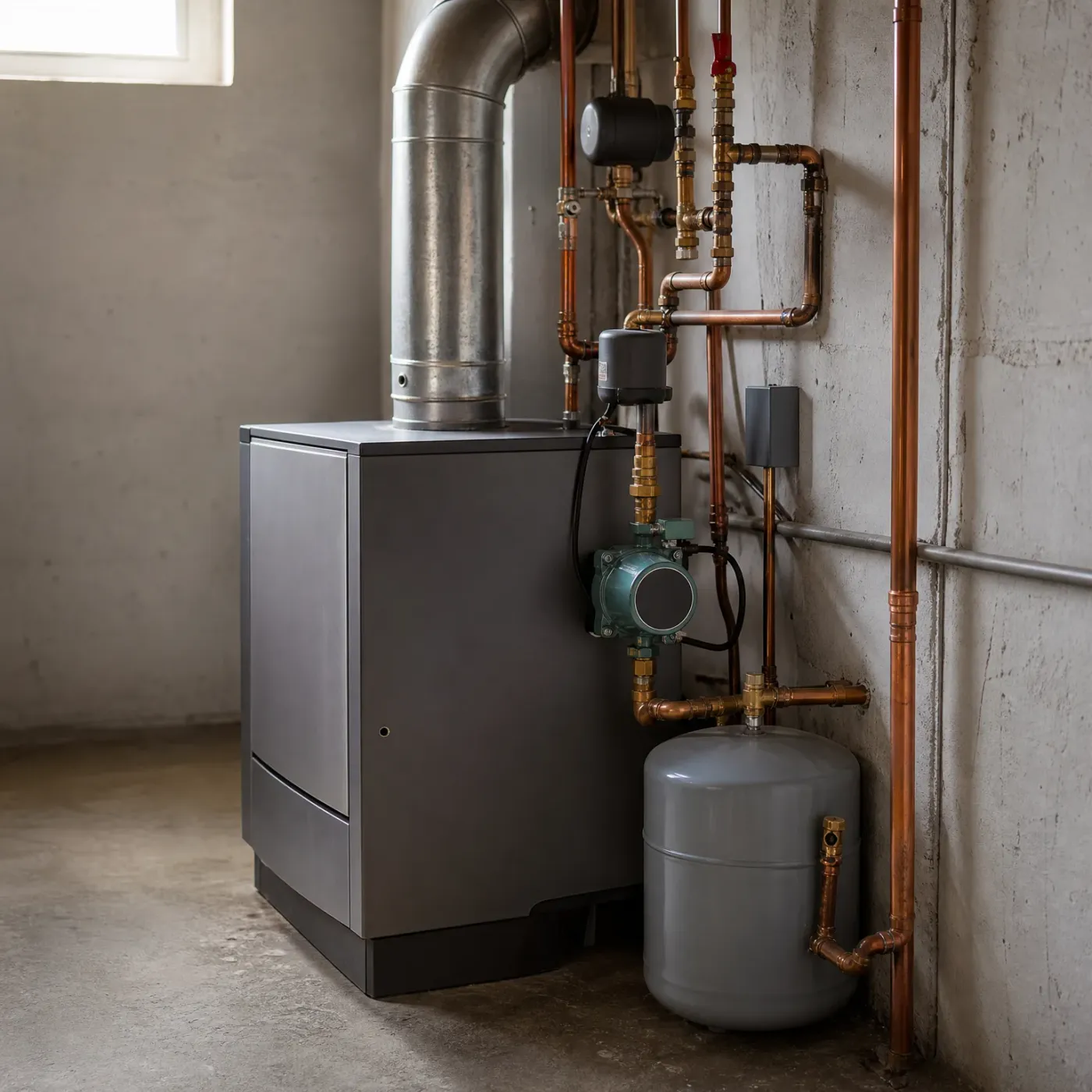
Why your boiler is leaking water in Alabama
A boiler usually leaks for one of a few reasons. The pressure relief valve opens because the system is holding too much pressure, and water drips out near the bottom of the tank or through a discharge pipe. A joint or valve seal has worn out and gives way slowly rather than all at once. Or the tank itself has corroded from the inside, which is the serious one, since a cracked tank means the unit needs replacing, not patching. Most homes in Alabama heat with electricity, so if you have a boiler at all, it's likely an older setup, and those internal seals and connections have had more years to wear down. A small leak now is worth catching, because left alone it can damage the floor underneath or cause the whole system to shut down on its own as a safety measure. Either way, the leak won't fix itself, and running the boiler while it leaks isn't something to wait out.





A boiler that's leaking is already costing you more
Most homes in Alabama heat with electricity, and that's not cheap to run. A boiler losing water doesn't fail quietly. It refills on its own, which means the system is pulling in fresh water and energy to heat it every time the level drops. You'll notice it on the floor near the tank, or rust starting where water's been sitting on a fitting. Left alone, the leak doesn't stay small. A worn seal or valve under pressure tends to get worse, not better.
There's also what you can't see. Water finding its way into a cabinet or onto a wood subfloor does damage that shows up later, after the original leak's been fixed. Getting someone out to look at it isn't a job for whoever's available fastest. It takes someone local who works on boilers all year and knows which part usually gives out first, so the repair holds instead of becoming a repeat call next month.

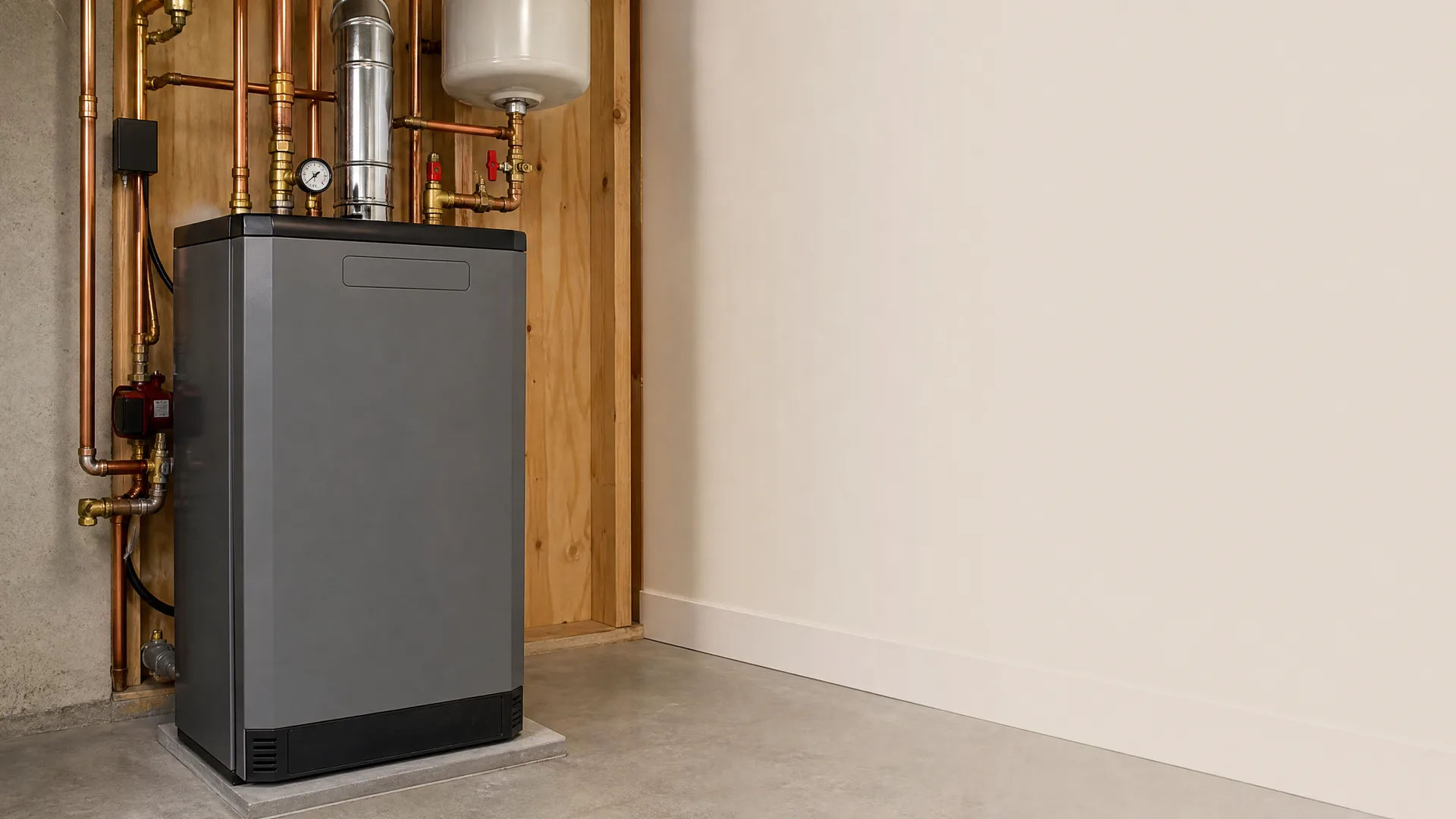
Where the water actually comes from
The pressure relief valve sits near the top of the tank and only opens when pressure climbs past a safe point. If it's dripping, something upstream is pushing the system too hard, often a failed expansion tank that can no longer absorb the water as it heats. Check the floor beneath the valve's discharge pipe. A dry pipe with a wet floor elsewhere points to a different leak, maybe a fitting or the circulator pump seal.
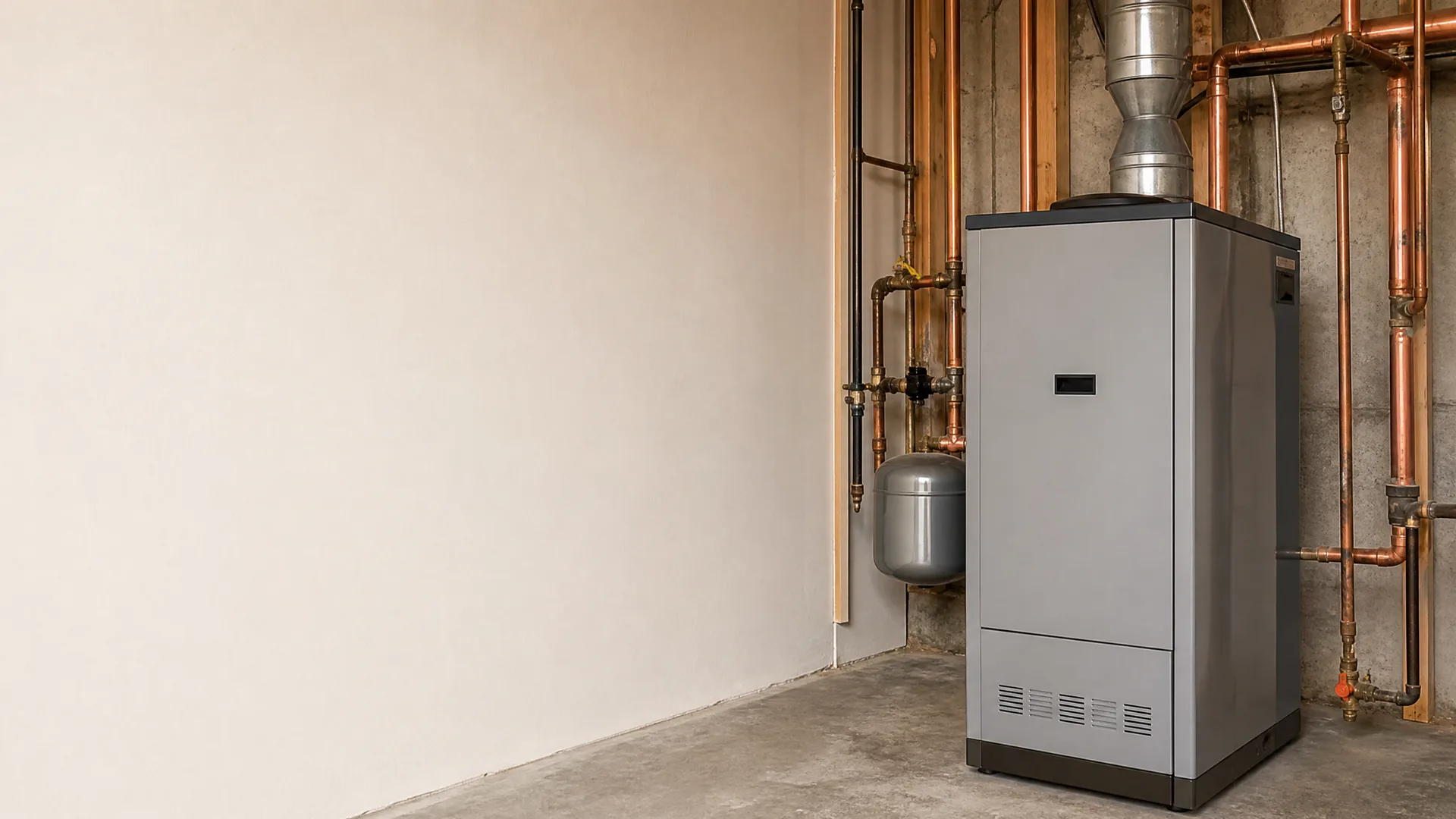
Small leaks don't stay small
A joint seal or valve packing that's starting to weep won't fix itself. Steel and cast iron corrode where water sits against them, so a slow drip at a union fitting can turn into a cracked section months later. Boilers built with standard steel tanks are more exposed to this than the glass-lined kind, since bare steel rusts through faster once water finds a way to the metal.
Is it safe to keep running my boiler while it's leaking?
You've noticed the leak but the house still needs heat, so you're wondering if it's all right to let the boiler keep running until someone can look at it, or if that makes things worse.
No, shut it down until it's checked
A boiler loses water because something inside it is already under strain, and running it longer adds heat and pressure to a system that's already failing to hold either. If the leak is from the pressure relief valve, that valve is doing its job and warning you the system is over-pressurized. Letting it run risks pushing more water out, dropping the internal water level low enough to damage the heat exchanger. If the leak is from a cracked joint or fitting, the metal around it is wet and corroding with every hour the system stays on. Turn off the power and the water supply to the boiler, and leave the heat off until a licensed contractor has looked at it.
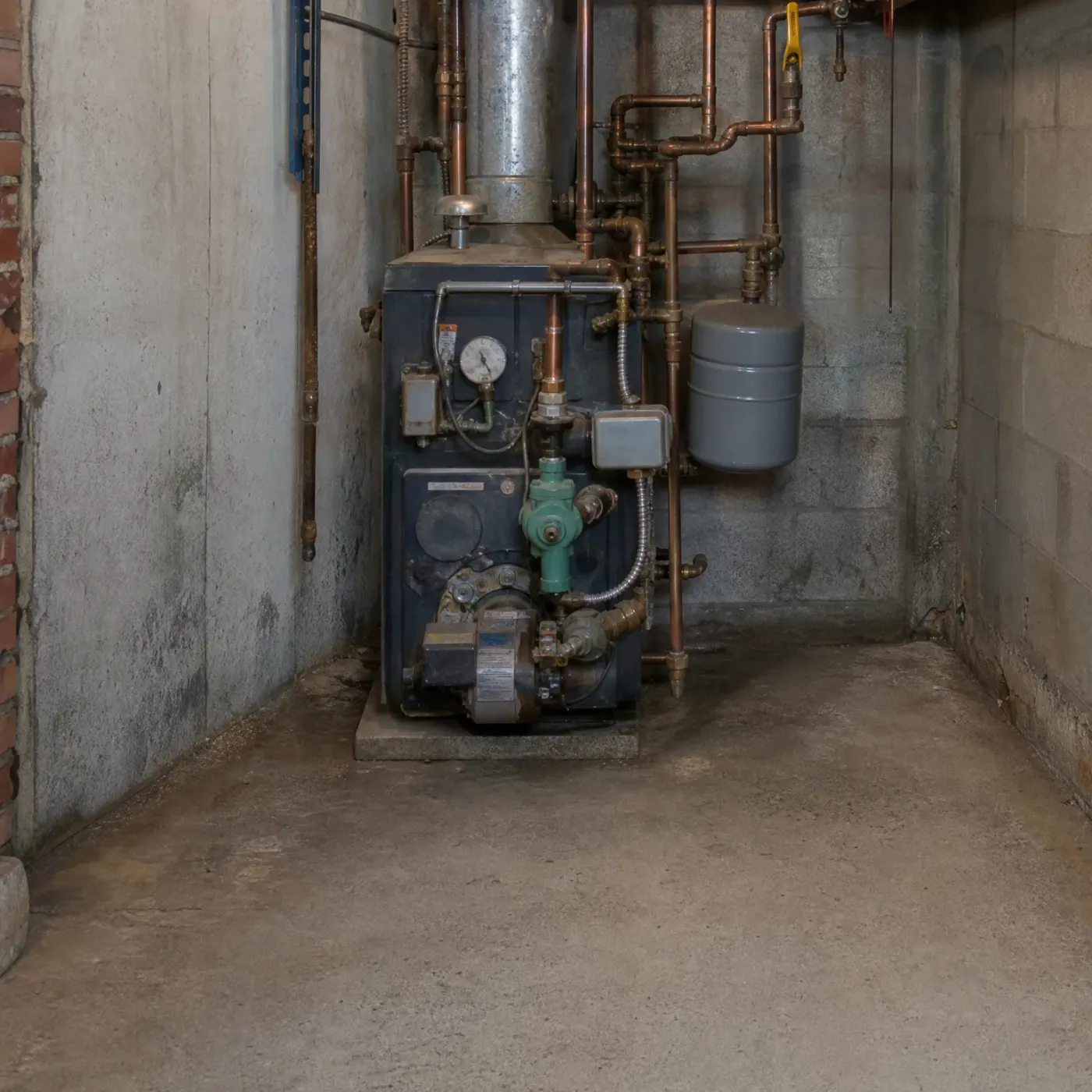
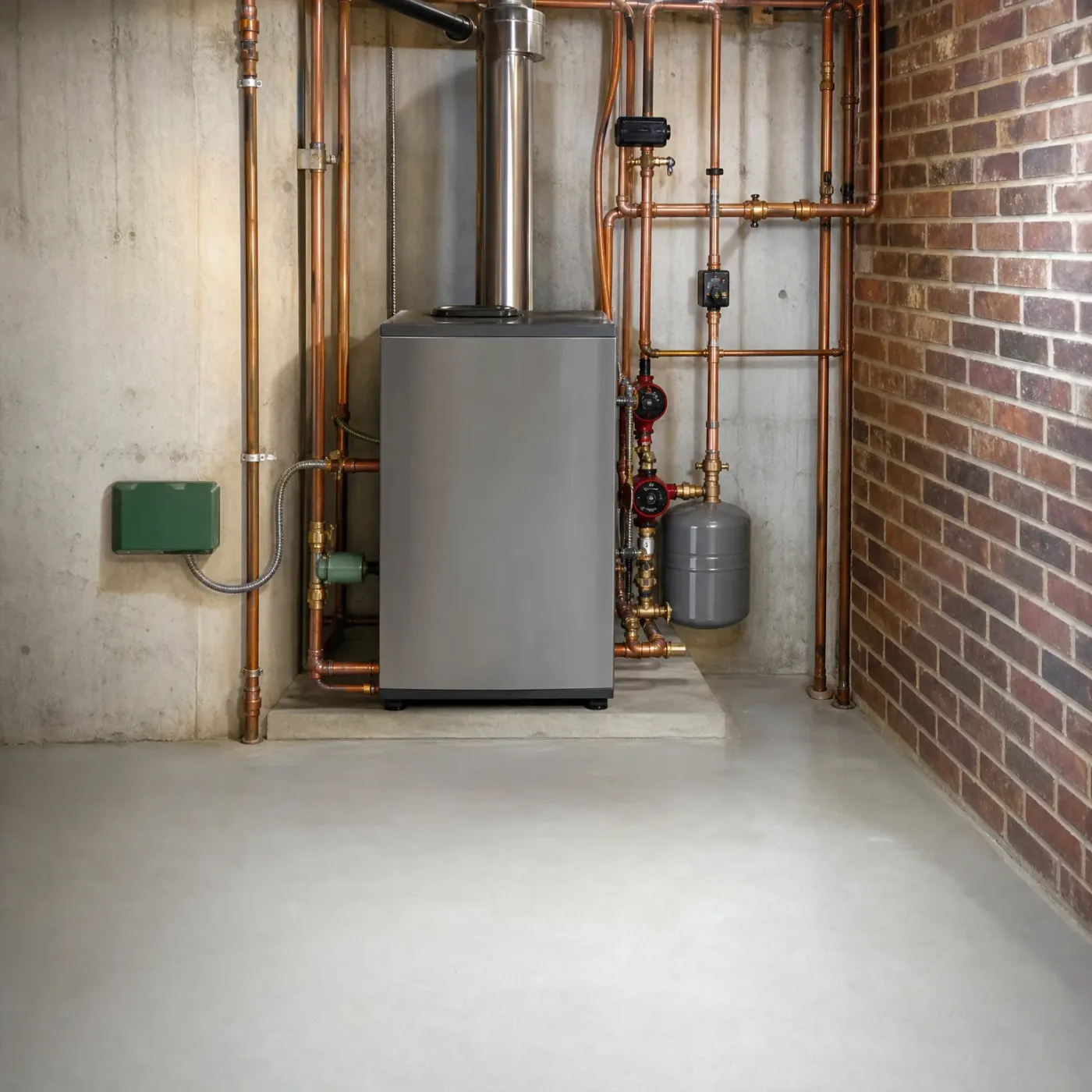
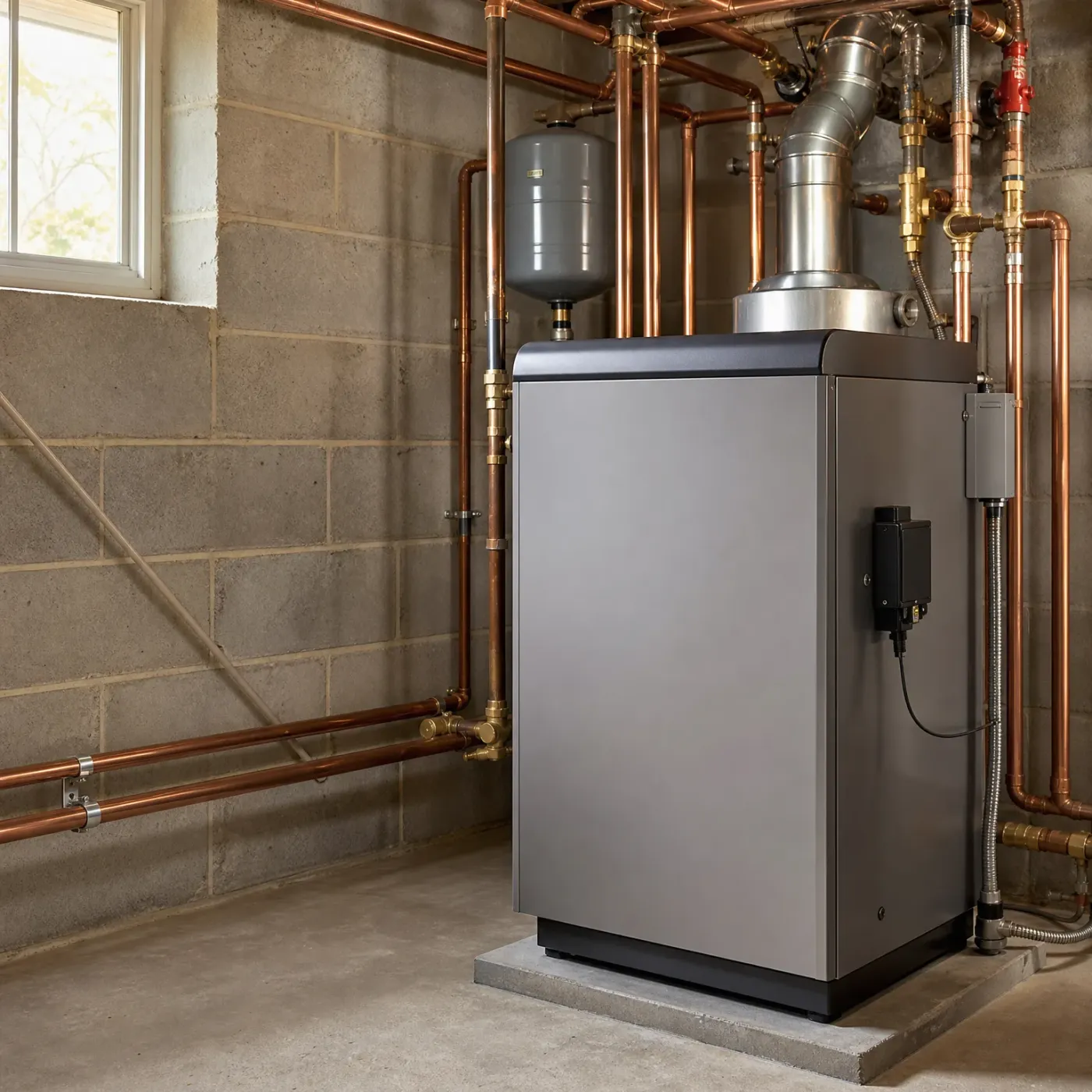
A pro who works on boilers
Only one pro gets your request, so you hear from one company.
Describe your boiler job, and a local pro who handles it gets in touch.
No fee to send it, and nothing to sign.
What are you noticing around your boiler right now
Look for a puddle at the base of the tank, or water stains on the floor nearby that keep coming back after you wipe them up. You might hear a hiss from the pressure relief valve, or see a slow drip from the discharge pipe even when the system isn't running. Rust around a fitting, a damp patch on a wall the boiler backs onto, or a musty smell in the room are all signs the leak has been going on longer than a day or two. Left alone, that moisture can soften the floor underneath or rust out the boiler itself, and a cracked tank isn't something a repair can fix.
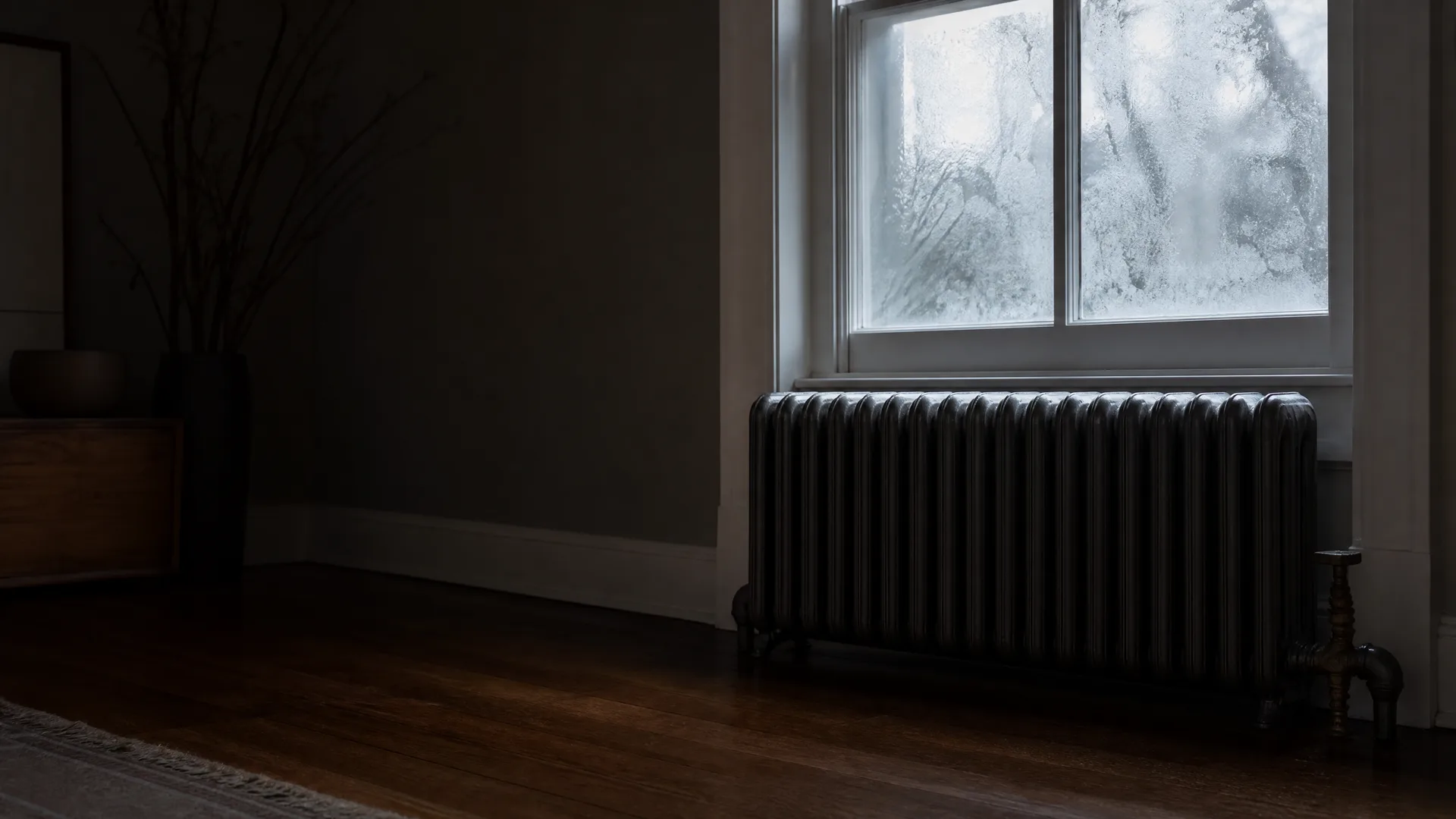
You're up early, before the rest of the house, and the living room is cold enough that you can see your breath near the window. The radiator under it ticks as it heats, and the glass above it has iced over on the inside, a thin white skin at the corners. You go to check the boiler and find water pooled at the base of the tank, already working its way toward the rug. Outside, Alabama is having one of those hard January mornings that don't last long but mean business while they're here. You put a towel down, turn the thermostat up a notch, and wonder how long the puddle's been forming before you noticed it.
Winter nights average 36°F statewide
Nights here average 36°F through December, January and February, cold enough that your boiler is running most hours it's dark out. A leak that might seep slowly in milder weather gets pushed harder when the system is cycling that much, so a small drip now tends to turn into a bigger one before spring.
NOAA nClimDiv 1991-2020 county normals weighted by homes


Where this leaves you
- A leak almost always traces back to pressure relief, a worn seal, or a cracked tank, and each one calls for a different fix.
- Letting it run while it leaks puts more strain on a system already working hard through Alabama's cold nights.
- A licensed plumber or HVAC contractor who works on boilers in this area all winter has likely already seen what's causing yours.
- Matching you with one local contractor means a single qualified person follows up, not a string of calls from companies you don't know.
- The sooner the source is found, the sooner the system stops pulling extra water and electricity to cover for it.
- Where you live and what you've noticed around the tank both help point a contractor toward the right repair before they arrive.
A boiler leak comes from one of a few places: the pressure relief valve, a worn seal or joint, or a crack in the tank itself. What you've noticed around the unit, where the water shows up and when, points toward which one it is. That's worth telling whoever comes to look, because it saves them time narrowing it down.
Running the system while it leaks doesn't buy you anything. Alabama's cold nights keep a boiler cycling for hours at a stretch, and a leak that seems small now works harder under that kind of demand. The system refills itself to cover the loss, which means it's pulling extra water and electricity every time it runs, on top of whatever you're already paying to heat the house.
None of this is a guessing game for someone who services boilers in this area through the winter. They've likely already seen the same failure in another home nearby, maybe several. That's who gets matched to your request, one licensed contractor local to you, not a handful of companies competing for the callback. You tell them what you're seeing, they come with a sense of what's probably wrong before they open the panel, and you're not stuck fielding calls from strangers while you wait.
The leak won't stop on its own. Once someone identifies where it's coming from, the fix is usually straightforward, and the system stops working overtime to make up for it.